The Chinese and Asian Art Forum. For Fans, Collectors and Dealers.
 Basic Rules For the BidAmount Asian Art Forum: Talk about whatever you want. You can even discuss and offer things that are for sale if they are authentic. Maximum image file size per post is 2 MB. Images of 700pxl x 700pxl are optimal if saved at a medium resolution. Be respectful of others and enjoy yourself. Click the YouTube link for a brief tutorial on using the forum. You can also EMBED Videos by cutting and pasting from You-Tube, Vimeo etc.
NOTE: To post an item or add a new post, click open the category title from the FORUM LIST, and CLICK the Blue ADD TOPIC button.

Hi All,
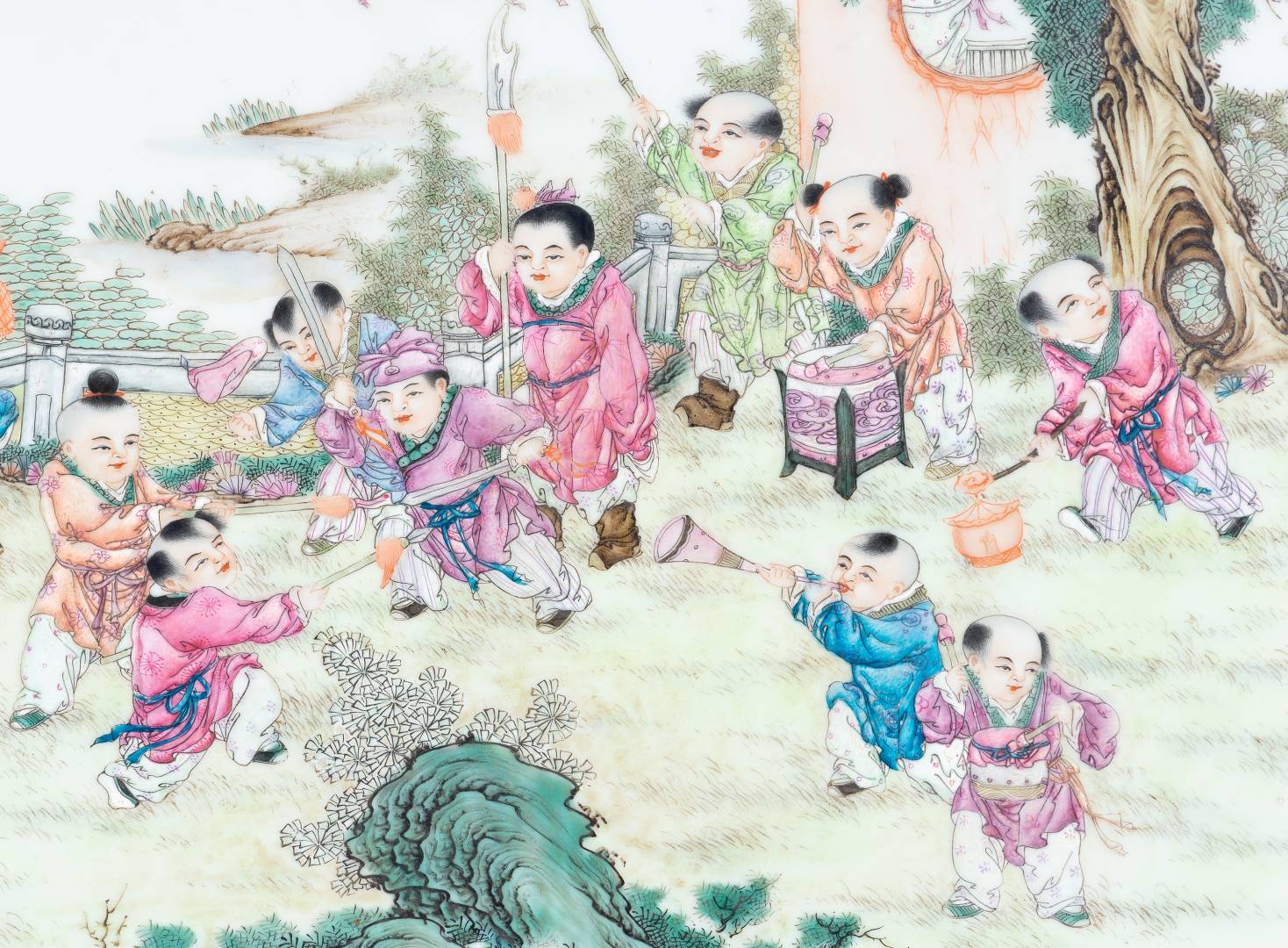
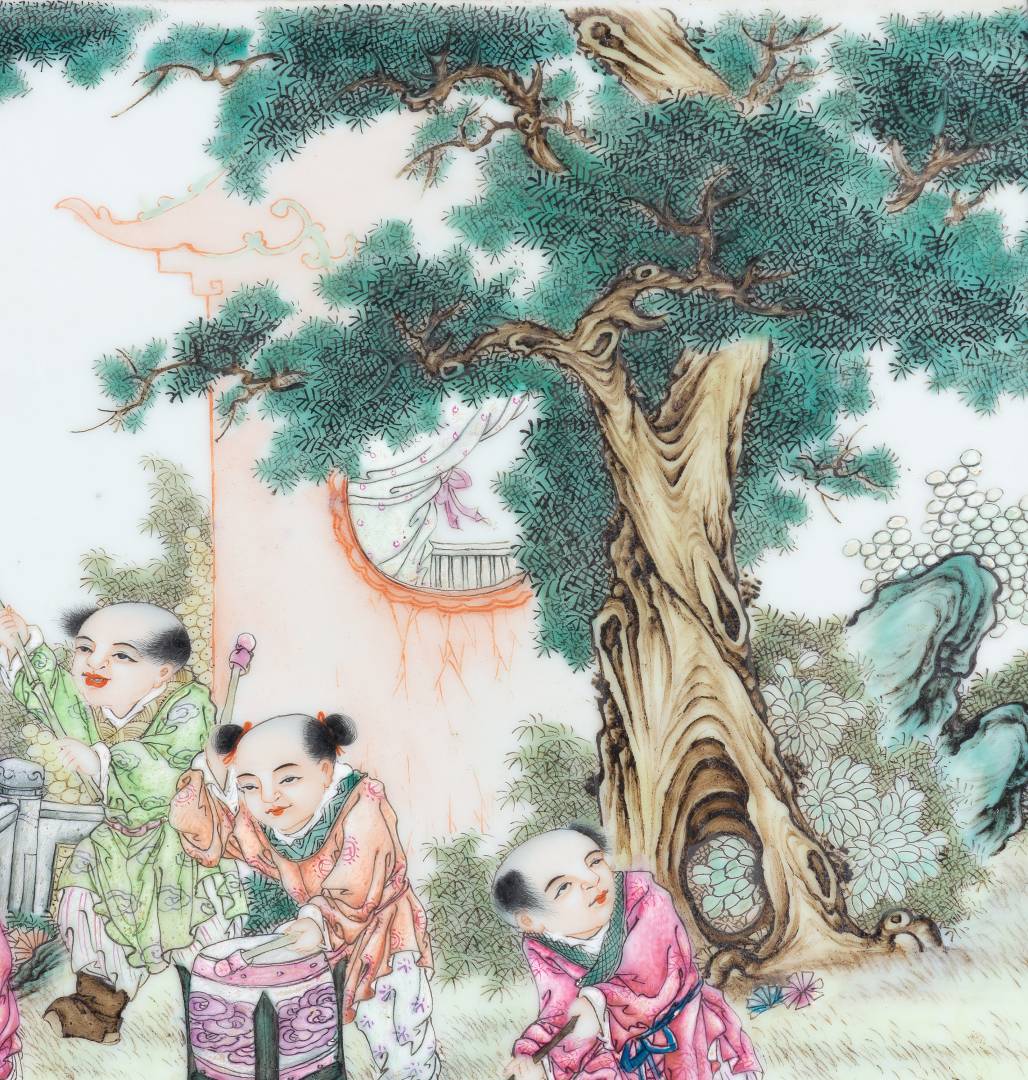
This plaque is larger than it looks; the frame is 29 inches x 21 inches, and the plaque, about 21 inches x 13 inches. The paint job looks to be above average--the children's faces are neatly done, and there is shading on their clothing, and the tree and the rock are well done. The coloration of the needles and leaves is neatly done and doesn't spill over to the nearby areas (in general).
On the other hand, the children's faces are all pretty much identical. I am not certain if it is Elkof's q23 (Republic to early PROC), of if it is q29 (last quarter of the 20th century), which he describes as being similar to this, but for which he does not show any good examples for children.
FYI, Chatgpt says the poem describes the coming of spring:
“Spring arrives and the winter frost fades.
Lanterns are hung to celebrate the new season.
Joy fills the heart; wine is gladly poured.
Peach branches bloom into flowers,
and all things revive with the coming of spring.”
No cyclic date.
Any thoughts?
Thanks,
Charles
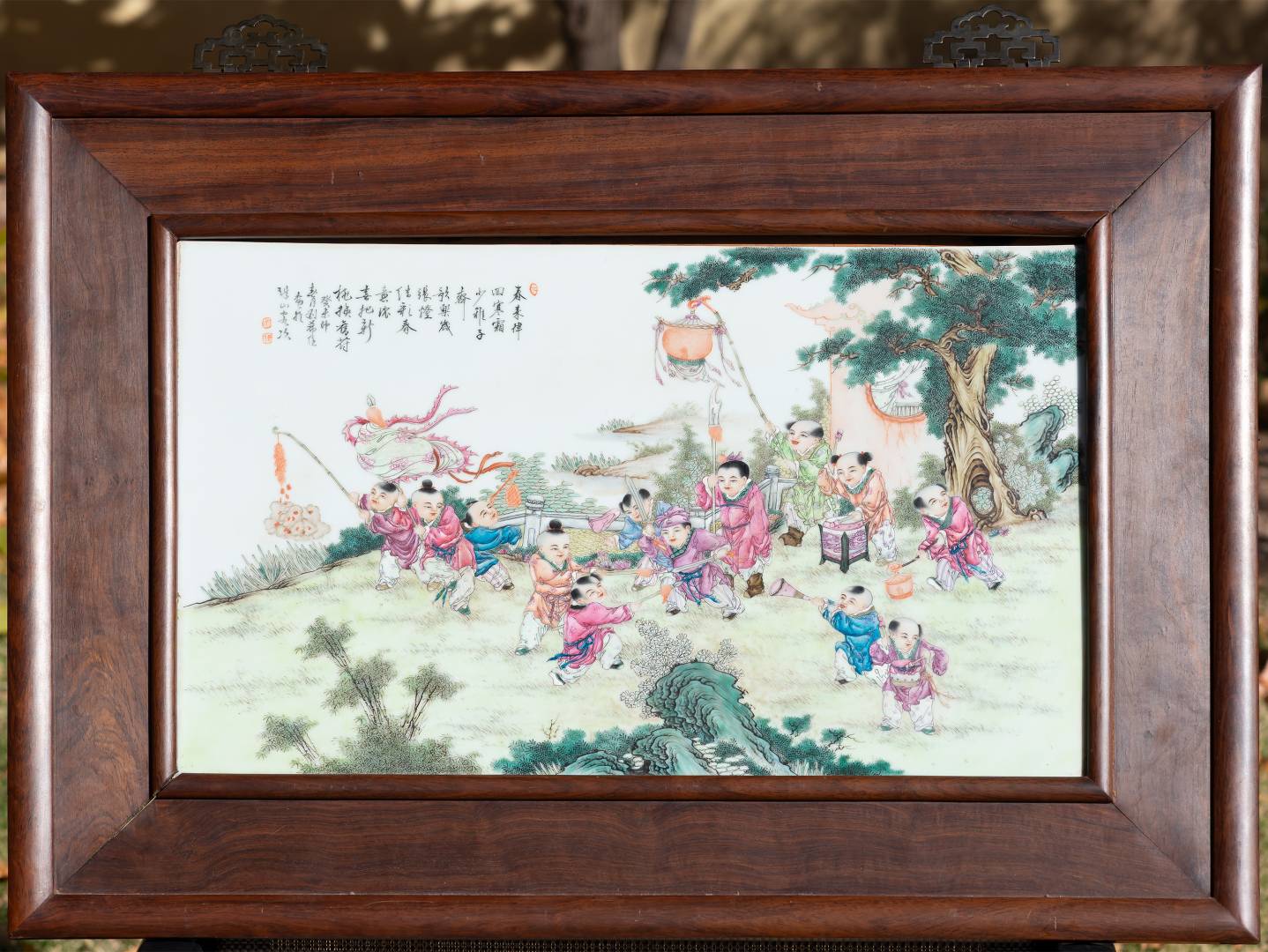
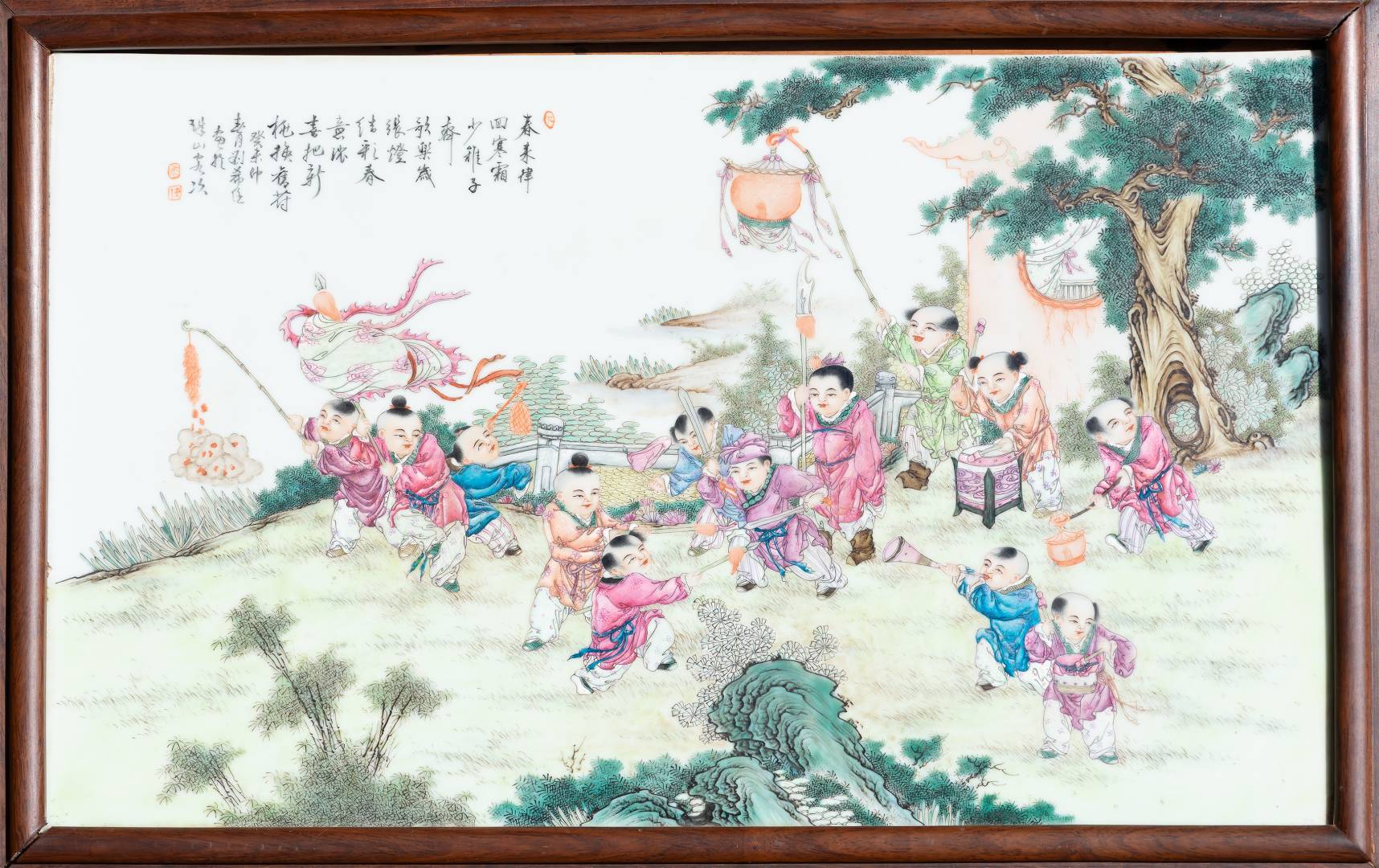
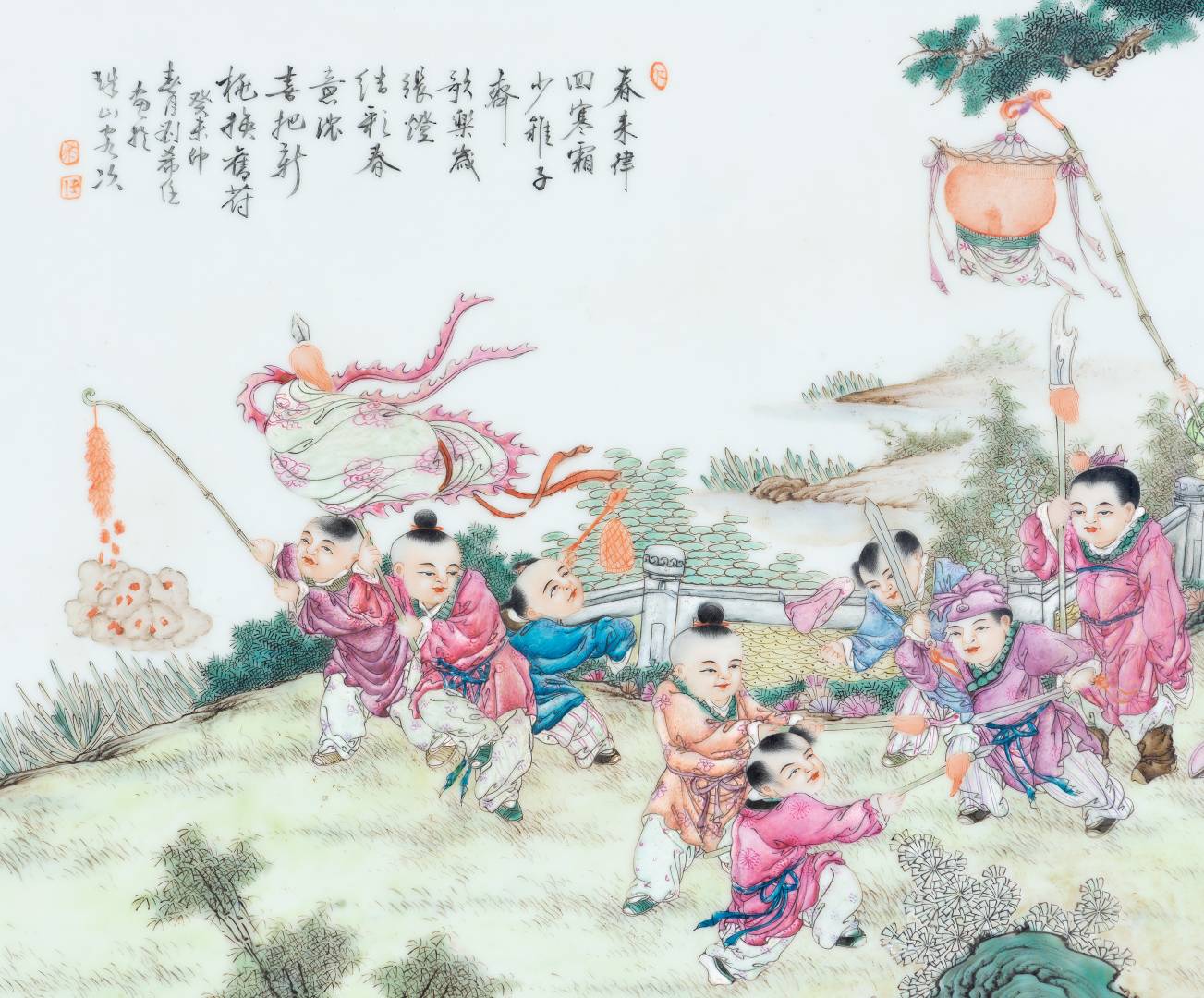
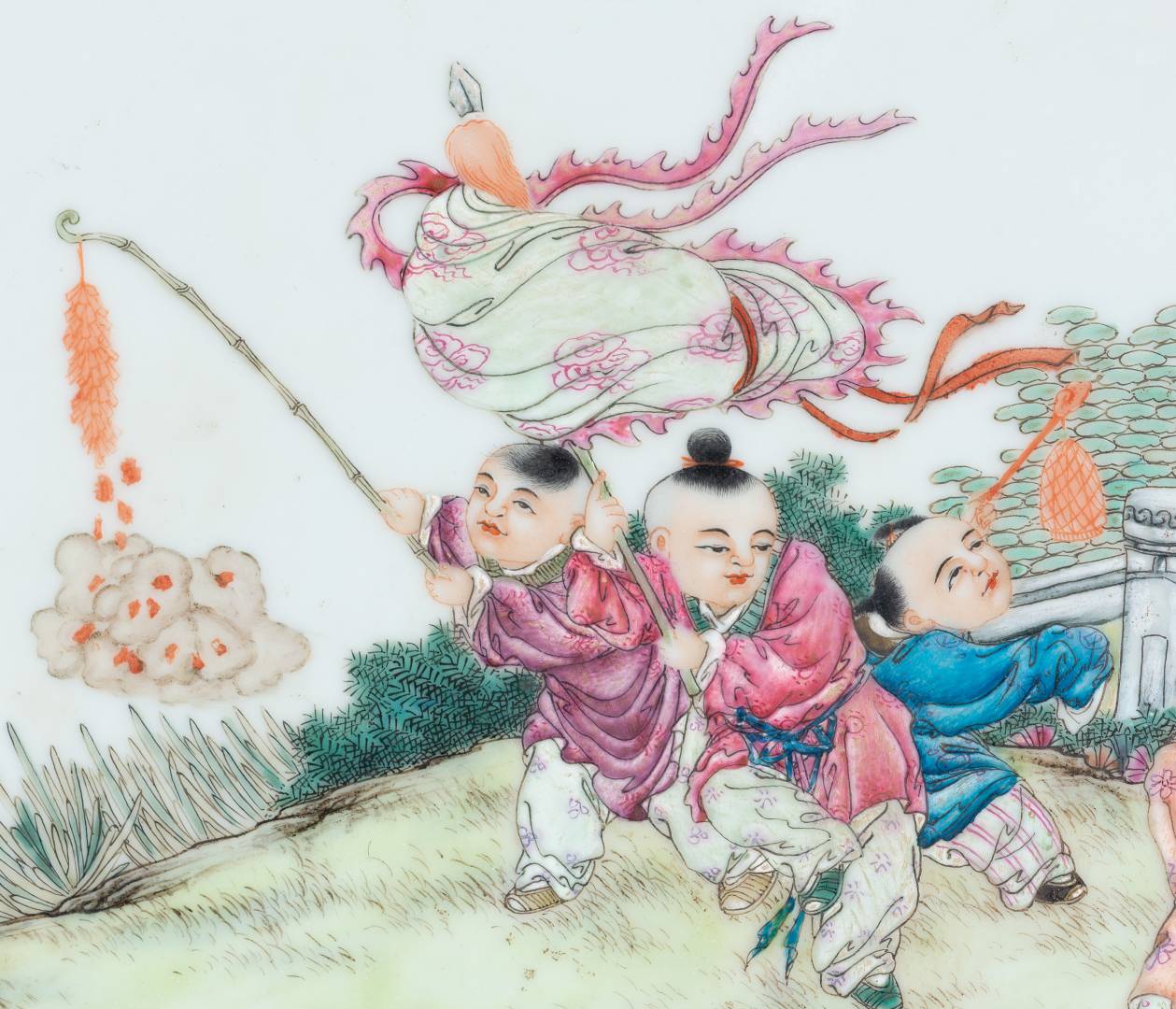
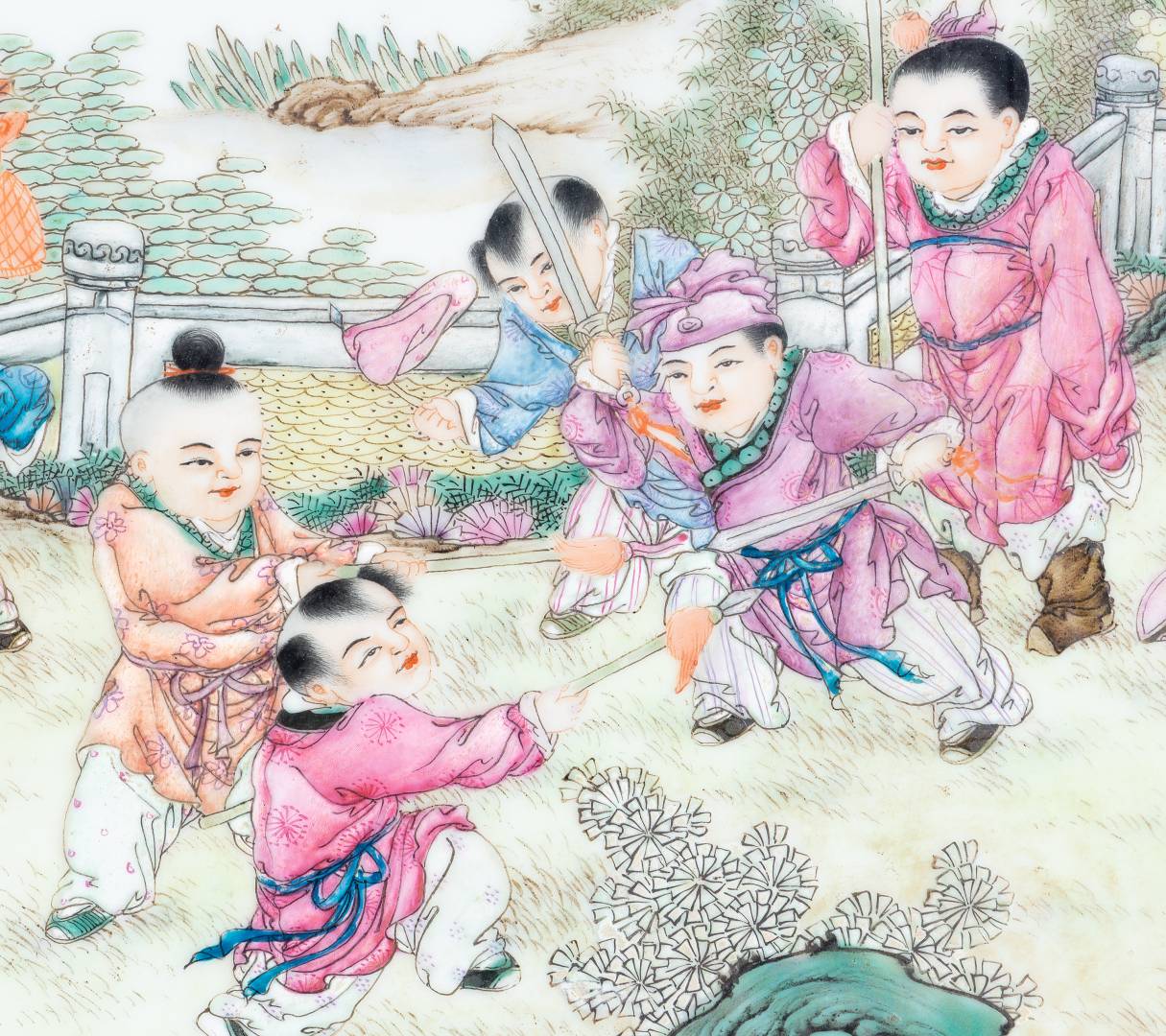

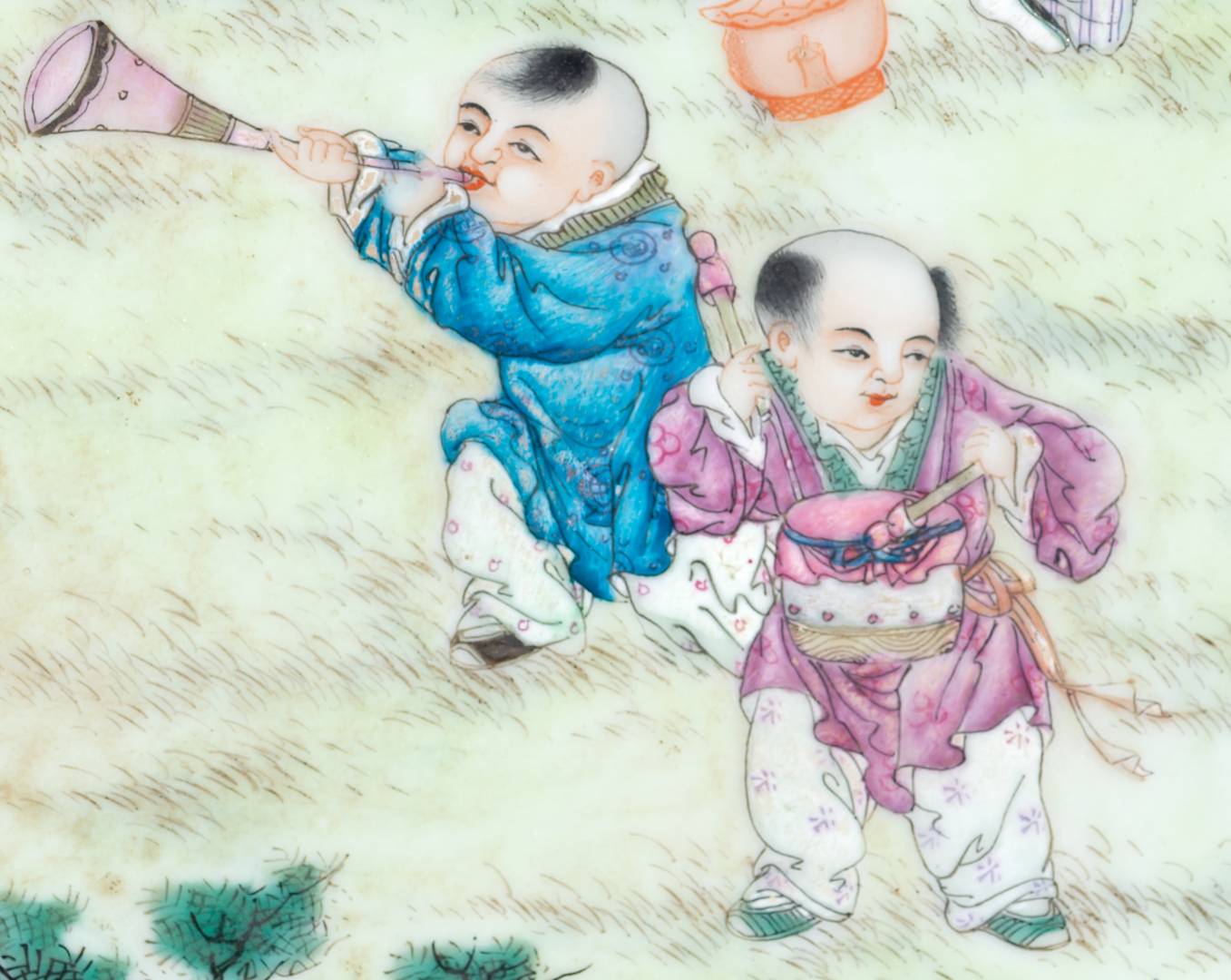
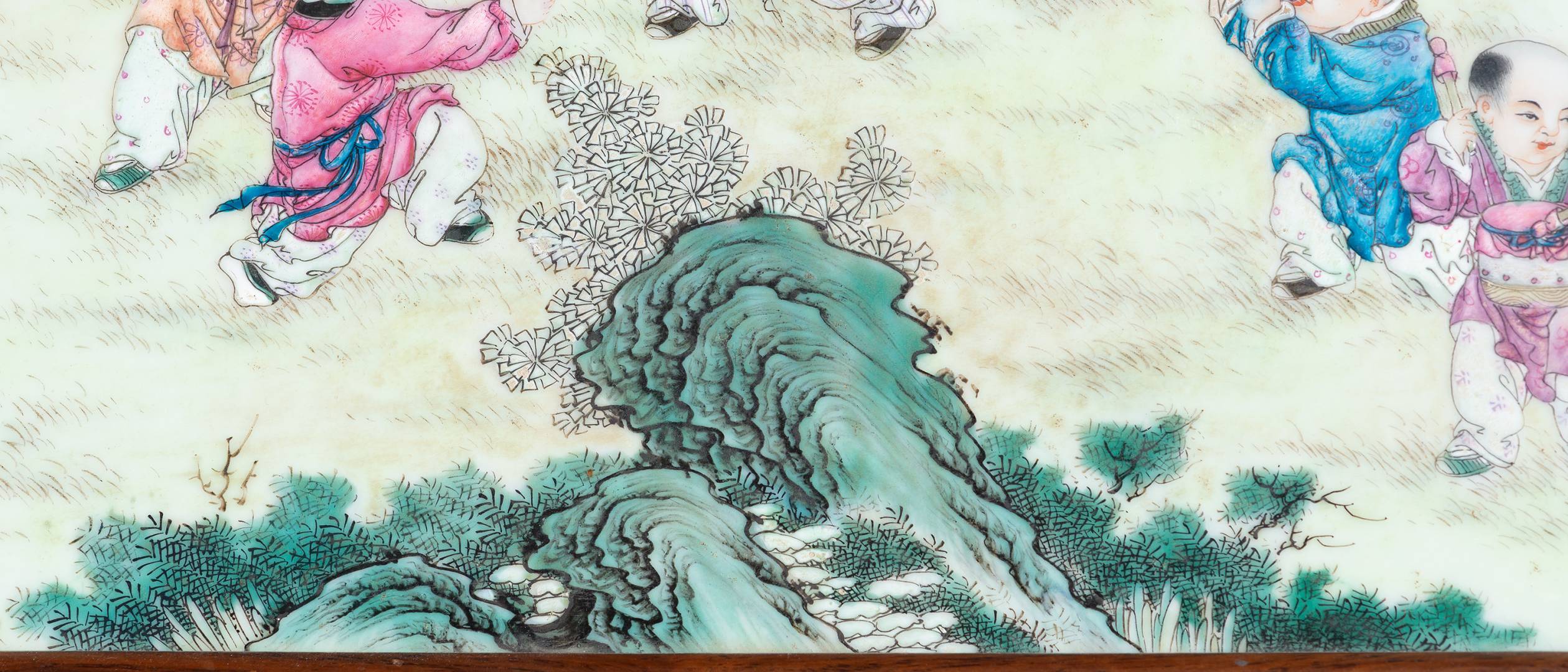

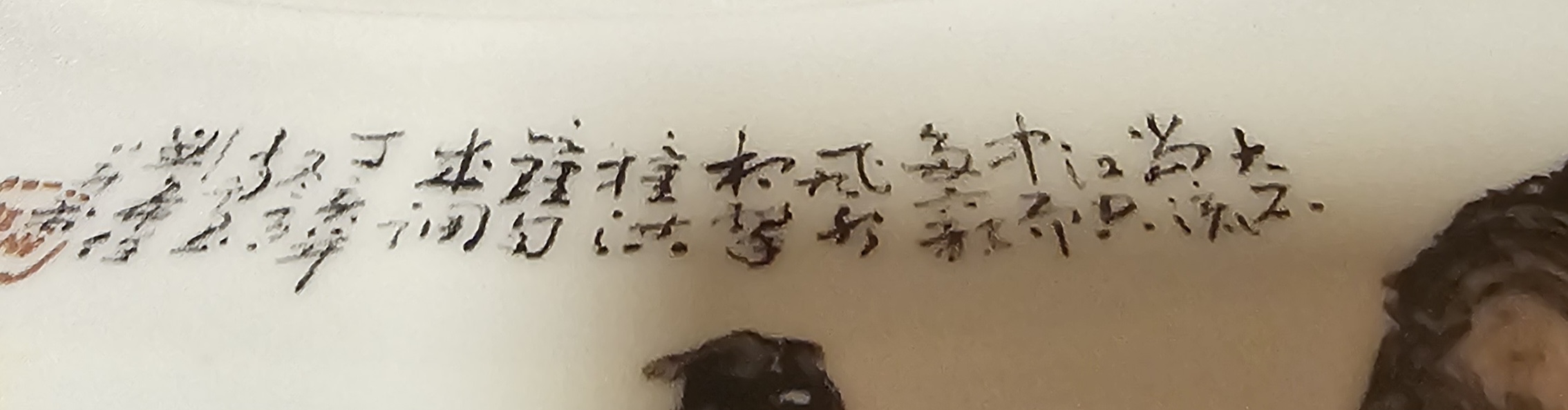
The inscription on this porcelain plaque attributes the painting to an artist named “刘希任.” Below is background information about him for your reference.
Liu Xiren (1906–1967), a native of Nanchang in Jiangxi Province, was a renowned porcelain painter active in Jingdezhen during the Republican period. By the 1930s he had already achieved prominence, particularly for his famille-rose figure painting. His themes frequently drew on classical literature and historical narratives, and his artistic style shows affinities with that of Wang Qi, the leading figure among the “珠山八友.”
(As for whether your piece was actually painted by “刘希任” himself, you will need to consult a qualified specialist for an authoritative assessment.)
Chinese antique porcelain
Thank you, Tony. Although I like the plaque, after looking at other work by Liu Xiren, I have to conclude that this plaque is unlikely to have been painted by him! It lacks the subtlety of his work, and the individuality and quality of the character faces.
Charles
On the other hand, I just found these, that look rather similar.
Bonhams : A pair of enamelled ceramic plaques Attributed to Liu Xiren (1906-1967), 20th century (2)


It's a very nicely painted plaque.
I do not believe it's a period example but likely later 20th Century or even a 21st Century attribute.
All these Republic period porcelain artists are highly sought after and hence being copied. Some are even better than the masters themselves.
For my eye the colours are a little bit off for Republic period. The faces all look the same
The calligraphy is in my opinion wrong and this is where one can safely distinguish between real and copies. To copy the hand style is very difficult.
Mark
One from Simon KWAN book on Republic period porcelain.
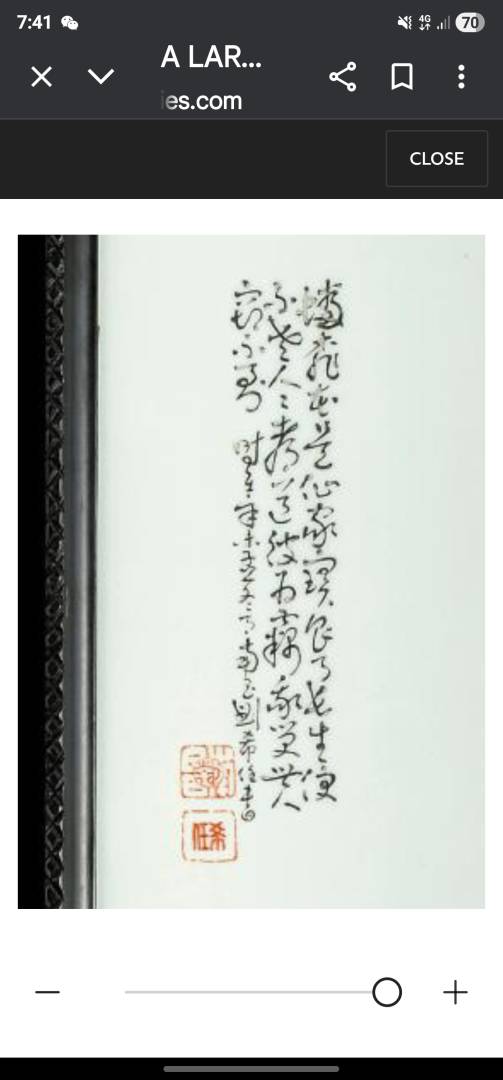
One from Christies in 2010
Another approach is to examine the reverse side of the porcelain plaque to assess the texture and material quality of the body, which can help determine whether the plaque itself is genuinely old. However, even if the porcelain body proves to be antique, questions remain as to whether the enameling was applied later and whether the work can truly be attributed to Liu Xiren. These issues require further research. At the very least, this method allows us to establish the age of the porcelain plaque.
Chinese antique porcelain

Did Republic artists always do their own calligraphy?
It seems that some did not. Whether by apprentice artists in their own studio, invited artists, or imitators, I have seen quite varied calligraphy in pieces attributed to the same person by reputable sources. Yes, there are copies, to be sure, which adds to the difficulty. (Note: I am not saying that Liu Xiren did not always do his own work -- I have not studied this artist and have no opinion.)
I would appreciate your comments on this, as I find it very confusing.
Many thanks,
Carol
Yes some students of the masters often signed work of the artist as a tribute or attribute.
As far as I am aware all the artists actually did their own calligraphy.
@tonyshu2573,
Yes I agree that the back is important to establish whether or not it is Republican or later as the method of manufacture was obviously different from wood kiln to gas kiln. However more recently they have started reusing the old technique of wood kiln.
Mark
@imperialfinegems Thank you, Mark.
Here are a couple of quotes on the subject from Simon Ng on an old Gotheborg.com thread:
"...........an important point in Qianjiang Ware about 'Calligraphy'.
"It seems many Qianjiang Painters would invite a Calligrapher to write for them after painting. The clue comes from after comparing with many Qianjiang works by different Artists, many of these works although done by different Artists, carry the similar calligraphy out of one hand.
"This is not the same thing as fakes.
"It's true some Qianjiang Painters painted well but calligraphy not equally well, so they would invite good calligraphers to write for them. But it's also a tradition in the Chinese painting circle that many would invite their teachers, friends to write for them as a gesture of honor, respect to the calligrapher."
And..................
"Mike may agree or can confirm the above point, named as 代筆 (Daibi, to write for) or there is even a term, 代筆人 (Daibiren, a ghostwriter)."
Mike answered, ".............this same word was also used to describe an amanuensis - someone writing at the instruction of another - exactly the function Simon has described above."
So, many of the qianjiang artists did their own calligraphy as well as, at times, having someone else do it. It can be very confusing to us amateurs! Adds another layer to the identification conundrum.
Thank you again,
Carol
Oh that's interesting to read from Simon NG.
All the important artist like Wang Dafan and members of the eight friends of zushan all did their own calligraphy with their particular seal or read mark.
It's plausible that some minor artists called in calligraphy experts to complete their works.
If the seal mark differs from known examples and this in conjunction with different style of calligraphy would indicate to me that the work is either done by a student or is a much later version.
Mark
You are absolutely right. Examining the reverse side of a porcelain plaque not only reveals whether it was fired in a wood-burning kiln or with other firing devices, but also provides insight into the clay body and the techniques used in shaping the plaque.
Chinese antique porcelain
Hi All,
Thanks for the input.
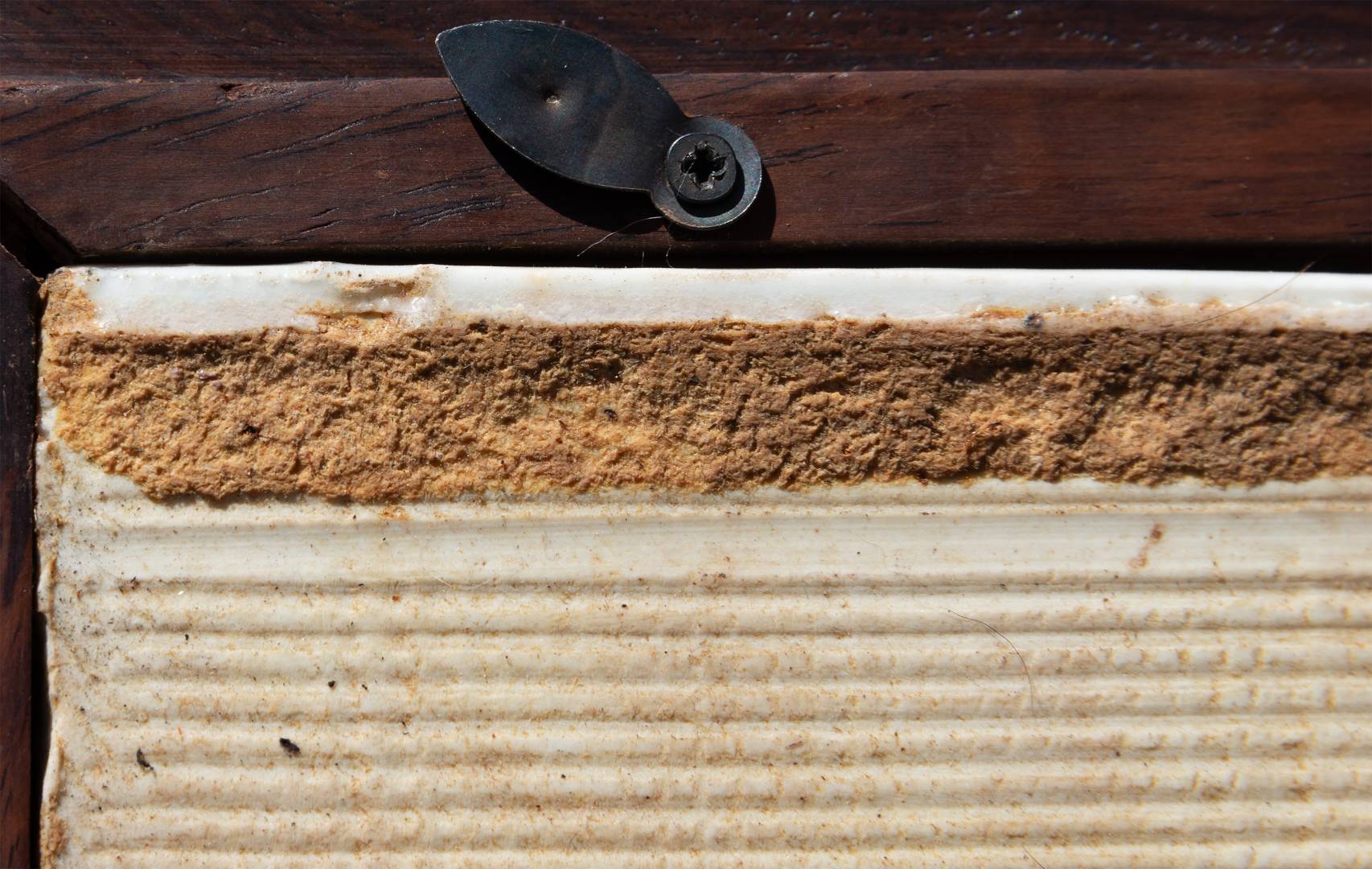
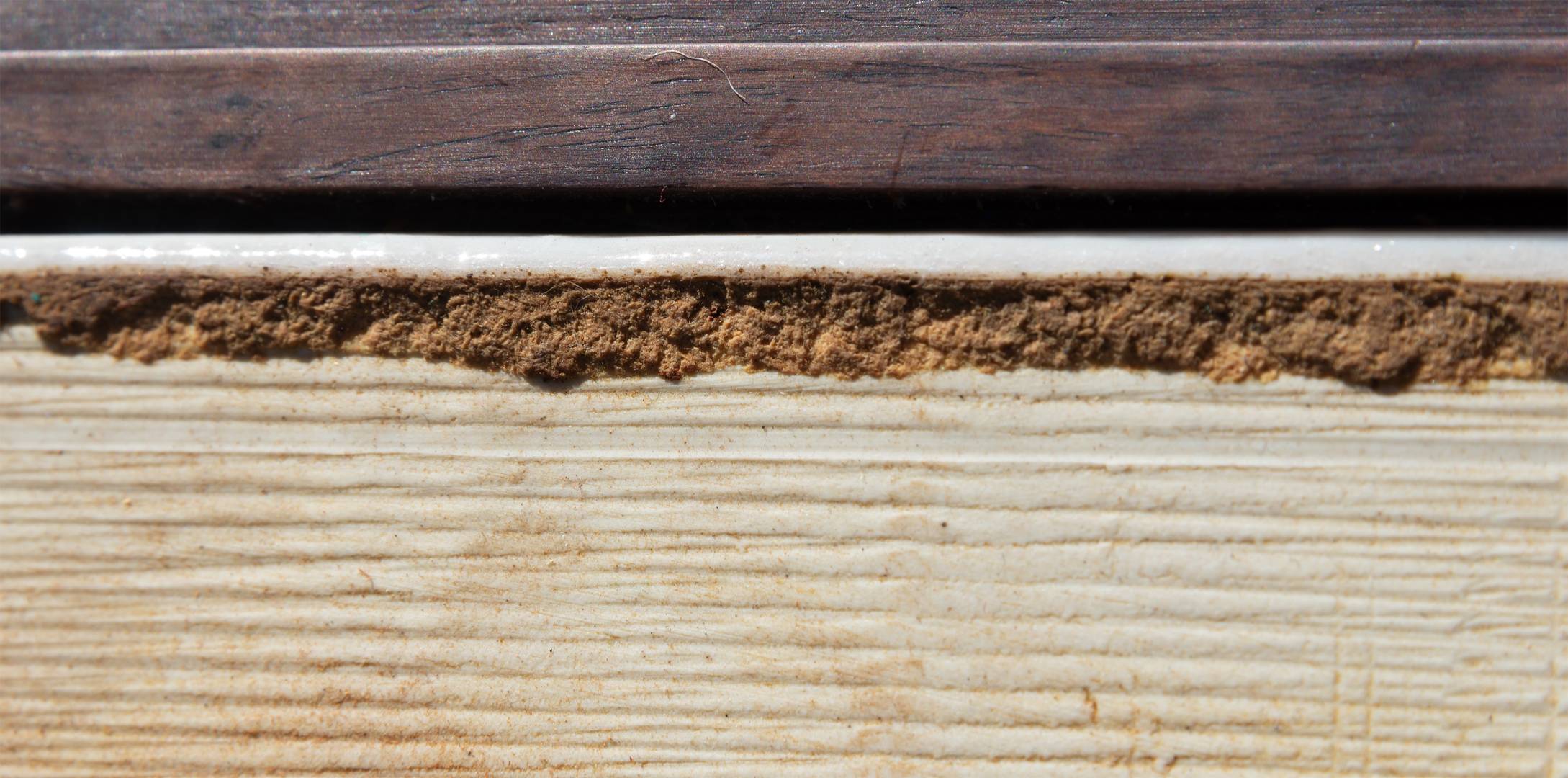
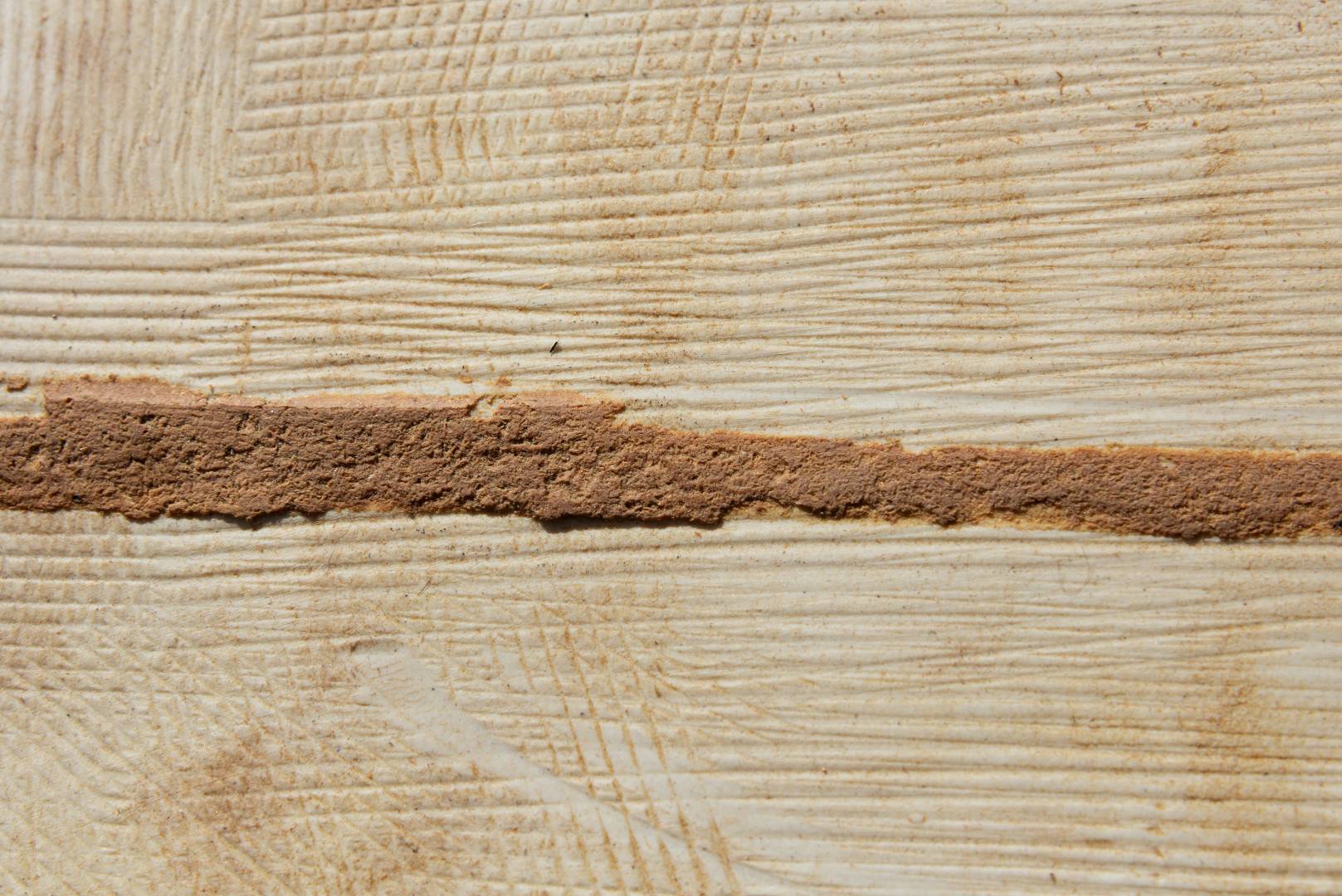
Here are some photos of the back of the plaque. It is more interesting than I thought it would be, although I don't know what it tells us. There are stripes of material that look like mortar across the back, and my first interpretation was that the plaque had been removed from something else, maybe a piece of furniture.
But on closer examination, I don't think that is true. The glaze along one side OVERLAPS the mortar, indicating the mortar was applied before firing. Now, I suspect that the strips of "mortar" were applied simply as kiln furniture, to support the plaque and keep the plaque off the shelf, so the glaze did not run over and cause the plaque to stick to the shelf. At least, that makes sense to me!
Not sure what this means about age...
Charles
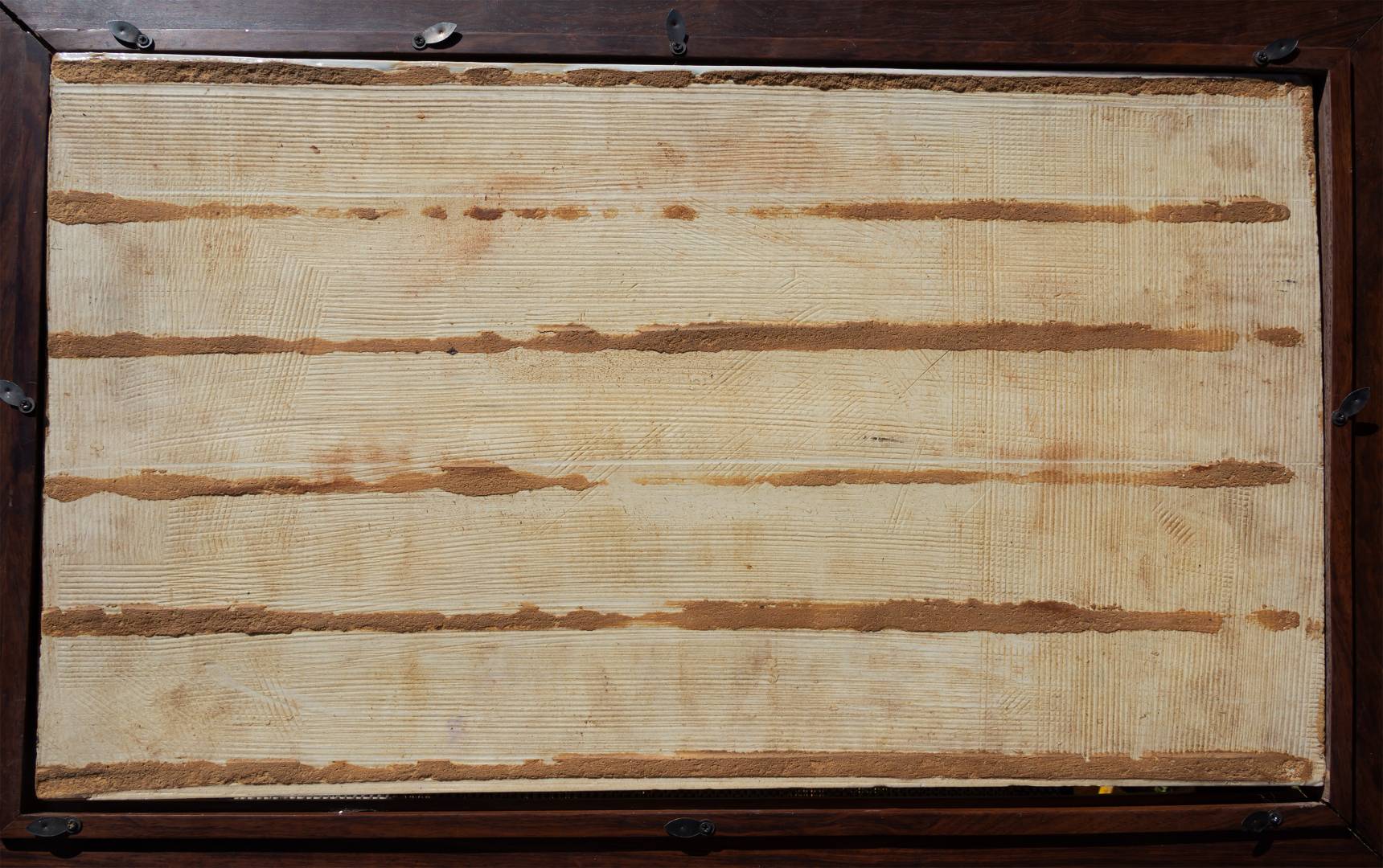

Not very old.
Latest Post: Is this figure republic ? Our newest member: Katharine LeClair Recent Posts Unread Posts

Thanks for visiting "The BidAmount Asian Art Forum | Chinese Art"
If you sell on eBay, or have a shop feel free to post images and descriptions and links.
Check back often for discussion about the latest news in the Chinese art and antique world. Also find out about the latest Asian art auctions at Sotheby's, Christie's, Bonhams and Tajans.
Auction results for: fine porcelain, ceramics, bronze, jade, textiles and scholar's objects. As well as Japanese, Thai, Vietnamese and other Asian cultures.
Thank you,
Peter Combs
Topics and categories on The BidAmount Asian Art Forum | Chinese Art
Kangxi vases, Kangxi dishes and chargers, Kangxi ritual pieces, Kangxi scholar's objects, Qianlong famille rose, Qianlong enamels, Qianlong period paintings, Qianlong Emporer's court, Fine porcelain of the Yongzheng period. Chinese imperial art, Ming porcelain including Jiajing, Wanli, Xuande, Chenghua as well as Ming jades and bronzes.

Join the BidAmount Chinese and Asian art discussion board and forum today
The BidAmount Asian Art Forum | Chinese Art
A free Asian art discussion board and Asian art message board for dealers and collectors of art and antiques from China, Japan, Korea, Thailand, Cambodia, Vietnam and the rest of Asia. Linked to all of the BidAmount Asian art reference areas, with videos from plcombs Asian Art and Bidamount on YouTube. Sign up also for the weekly BidAmount newsletter and catalogs of active eBay listing of Chinese porcelain, bronze, jades, robes, and paintings.
The art of calligraphy - and for the ancient Chinese it certainly was an art - aimed to demonstrate superior control and skill using brush and ink. Calligraphy established itself as one of the major Chinese art forms during the Han dynasty (206 BCE - 220 CE), and for two millennia after, all educated men were expected to be proficient at it.
The Museum’s collections of Asian art span nearly five millennia and encompass the cultures of China, the Himalayas, India, Japan, Korea, and Southeast Asia. In 2007, the Museum launched an initiative to create dedicated galleries for the collection, beginning with a gallery for the arts of Korea ...
Chinese art is full of symbolism, in that artists typically seek to depict some aspect of a totality of which they are intuitively aware.
China Online Museum is the finest online museum of Chinese art. It features Chinese calligraphy, painting, ceramics, bronzes, carving, and other artworks.
Chinese Ceramics & Works of Art. Overview Upcoming auctions Contacts Auction results ... Christie’s sales of Chinese ceramics and works of art showcase centuries of Chinese history. Held throughout the year in London, New York, Paris and Hong Kong, they attract a wide audience of collectors and connoisseurs vying for pieces as diverse as ...
Explore Asian Art Week. Contact the Specialist Department. Chinese Paintings ... Senior Specialist, Head of Sale. [email protected]. Tel:+1 212 641 5760. Bid in-person or online for the upcoming auction:Fine Chinese Paintings on 10 September 2019 at New York. Bid in-person or online for the upcoming auction:Fine Chinese Paintings on 10 ...
Discover an abundance of must-see art from all corners of a vast continent at Christie’s NY Asian Art Week. From contemporary classical and Chinese paintings to works with exemplary provenance from the Art Institute of Chicago, our Rockefeller Paza galleries will be full of ancient treasures and contemporary masterworks in a salute to the vibrant arts of Asia.
Sold to benefit The Art Institute of Chicago’s Asian Art Acquisition Fund, the sale features 84 lots with a focus on Ming and Qing porcelains, and offers a rare insight into the taste for collecting Chinese ceramics and works of art in the Midwest from the end of the 19th century through the 1980s. Highlights include two Wanli wucai garlic-head vases, a Qianlong mark and period, blue and ...
Specialist, Chinese Paintings, Christie's London Dr Malcolm McNeill is a Specialist in Chinese Paintings at Christie’s, based in London. He previously worked as an assistant curator of the Chinese collections and the Victoria and Albert Museum in London, as a researcher at the British Museum, and as a translator and tour guide at the National Palace Museum in Taipei.
The Christie's Education 2020 Conference: The Chinese Art Market 18 Jun 2019 Christie’s Education is delighted to announce our first international academic conference in Asia which will take place in Hong Kong from 26-27 November 2020 at the Hong Kong Convention and Exhibition Centre and will run in parallel with Christie’s Hong Kong Autumn Auctions.
The summer Chinese Art sale in Hong Kong will feature works of art from several private collections, including Qing porcelains and textile from the collection of the legendary Chinese art dealer A. W. Bahr (1877–1959), fine gilt bronze Buddhist sculptures from an old Hong Kong collection, an East Asian collection of Qing dynasty wine cups and jades, and a Japanese collection of Song ceramics ...
Sotheby's Chinese Works of Art Department holds two auctions each year in London, New York, Hong Kong and Paris.
Chinese Art - View Auction details, bid, buy and collect the various artworks at Sothebys Art Auction House.
With more than 340 Chinese works of art dating from the Neolithic to the Republic periods, highlights of this sale include a selection of Qing Imperial monochromes from the collection of Arnold and Blema Steinberg, early ceramics from the Art Institute of Chicago and Chinese porcelain and works of art from the collection of Henry Arnhold.
Results: Sotheby's Asia Week achieved $52.4 million in six strong auctions, exceeding pre-sale estimates. With 76.5% of lots sold and 60.3% of lots surpassing high estimates, the Asian art sales at Sotheby's indicate continued collector interest in the finest works of art from China, India and and the Himalayas.
Today's sale of Important Chinese Art will proceed as planned with sessions at 10 AM and 2 PM EDT. Sotheby's will be monitoring the weather conditions throughout the day and will be available to coordinate alternative bidding options should conditions make it difficult for clients to attend the auction in person.
Bonhams Chinese Art department is renowned for offering the finest works of art representing the richness and breadth of China's artistic heritage, particularly Imperial porcelain, white and spinach green jades, cloisonné and Buddhist art. Specialised international auctions are held globally, including London, Hong Kong and San Francisco.
Bonhams : Chinese Works of Art We use cookies to remember choices you make on functionality and personal features to enhance your experience to our site. By continuing to use our site you consent to the use of cookies. Please refer to our privacy and cookie policies for more information.
Bonhams Fine Art Auctioneers & Valuers: auctioneers of art, pictures, collectables and motor cars. We use cookies to remember choices you make on functionality and personal features to enhance your experience to our site. By continuing to use our site you consent to the use of cookies. ... Chinese Art (US) General enquiries
Bonhams : Fine Chinese Art We use cookies to remember choices you make on functionality and personal features to enhance your experience to our site. By continuing to use our site you consent to the use of cookies. Please refer to our privacy and cookie policies for more information.
Bonhams Fine Art Auctioneers & Valuers: auctioneers of art, pictures, collectables and motor cars Bonhams : Asian Art We use cookies to remember choices you make on functionality and personal features to enhance your experience to our site.
Bonhams are international auctioneers of fine Chinese and Japanese art. We specialise in rare Imperial and Export Chinese ceramics and works of art, as well as Japanese ceramics, fine and decorative works of art from the Neolithic Period to the 20th century. View on map
Bonhams Fine Art Auctioneers & Valuers: auctioneers of art, pictures, collectables and motor cars. We use cookies to remember choices you make on functionality and personal features to enhance your experience to our site. By continuing to use our site you consent to the use of cookies. ... Asian Art Bonhams. Work. 22 Queen St.