The Chinese and Asian Art Forum. For Fans, Collectors and Dealers.
 Basic Rules For the BidAmount Asian Art Forum: Talk about whatever you want. You can even discuss and offer things that are for sale if they are authentic. Maximum image file size per post is 2 MB. Images of 700pxl x 700pxl are optimal if saved at a medium resolution. Be respectful of others and enjoy yourself. Click the YouTube link for a brief tutorial on using the forum. You can also EMBED Videos by cutting and pasting from You-Tube, Vimeo etc.
NOTE: To post an item or add a new post, click open the category title from the FORUM LIST, and CLICK the Blue ADD TOPIC button.

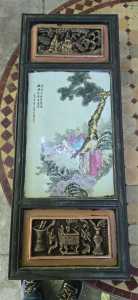
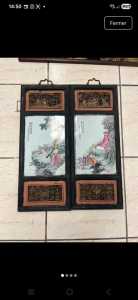
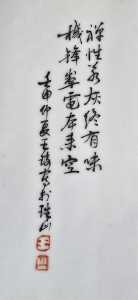
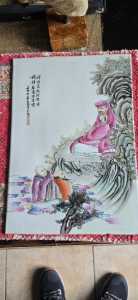
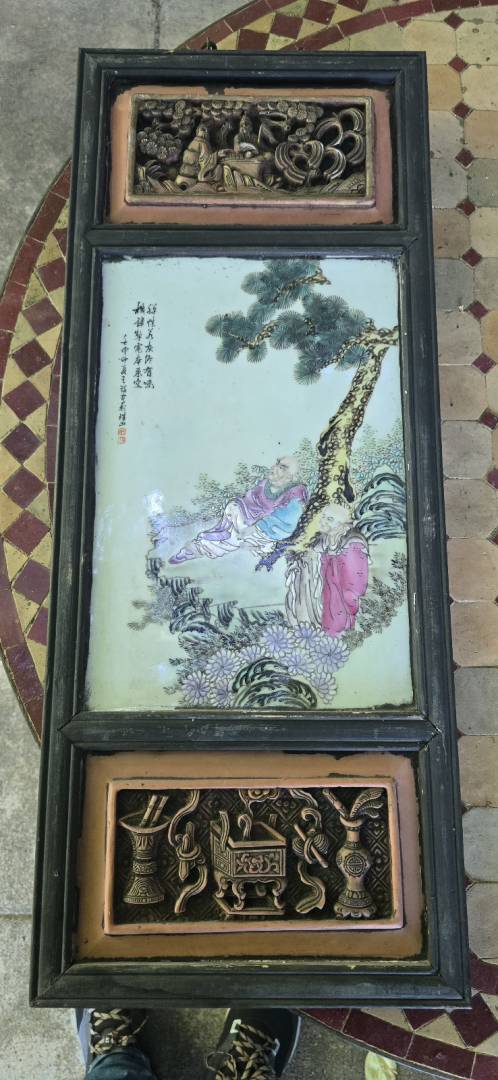
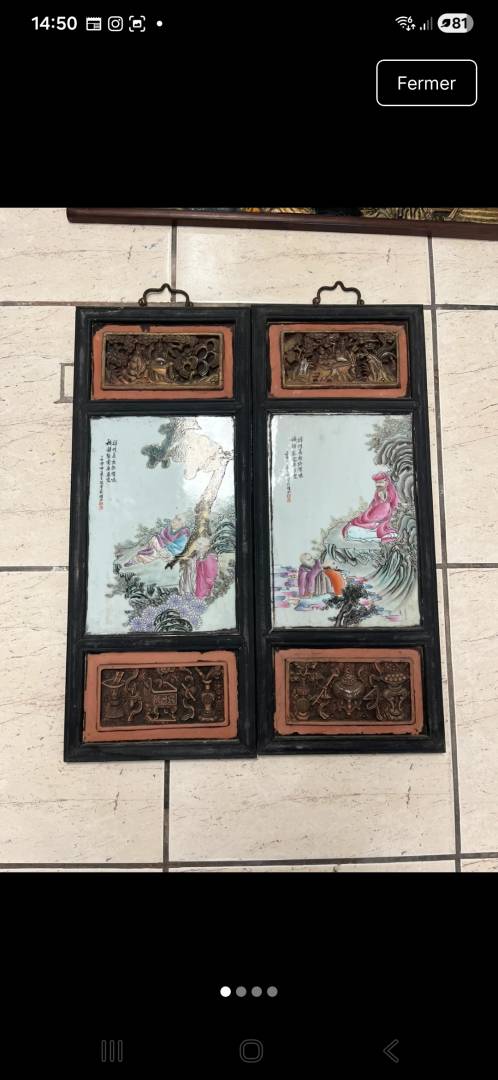
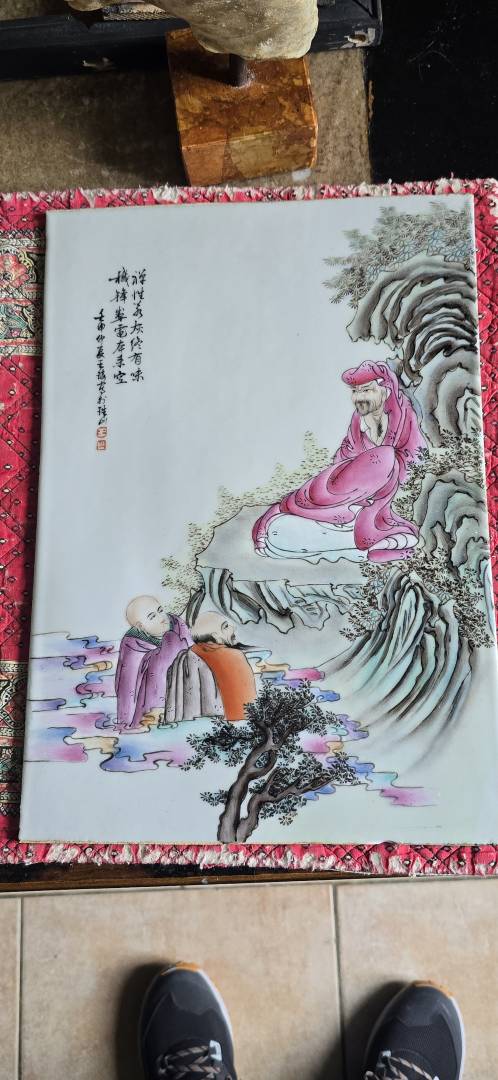
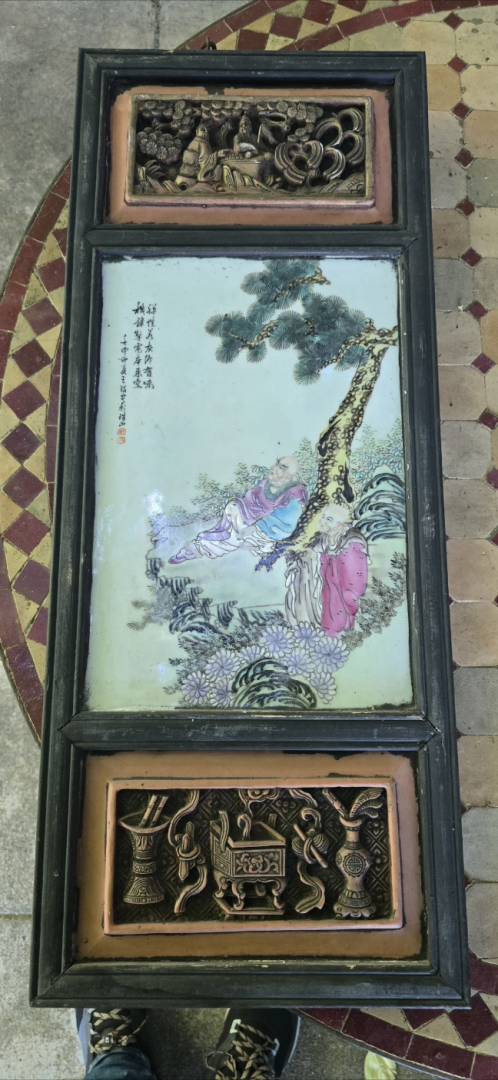
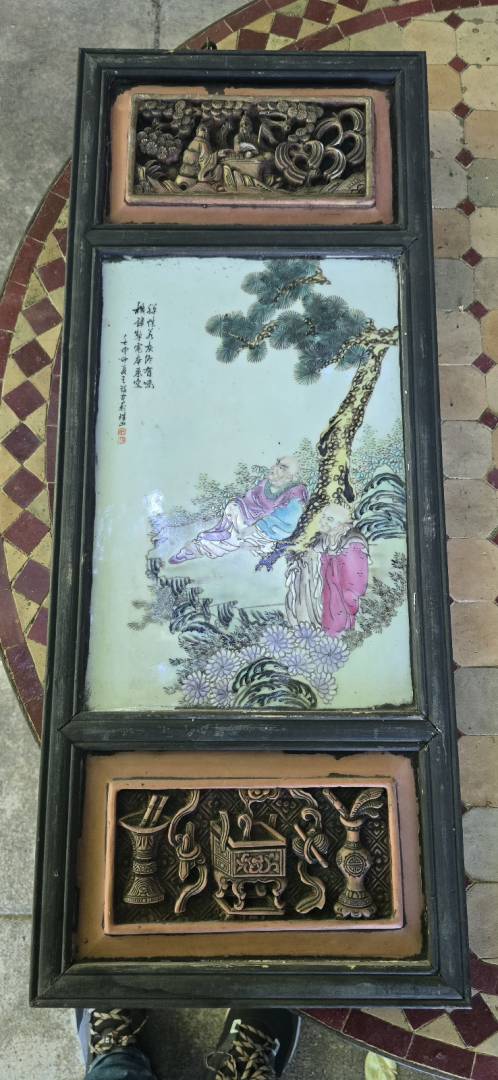
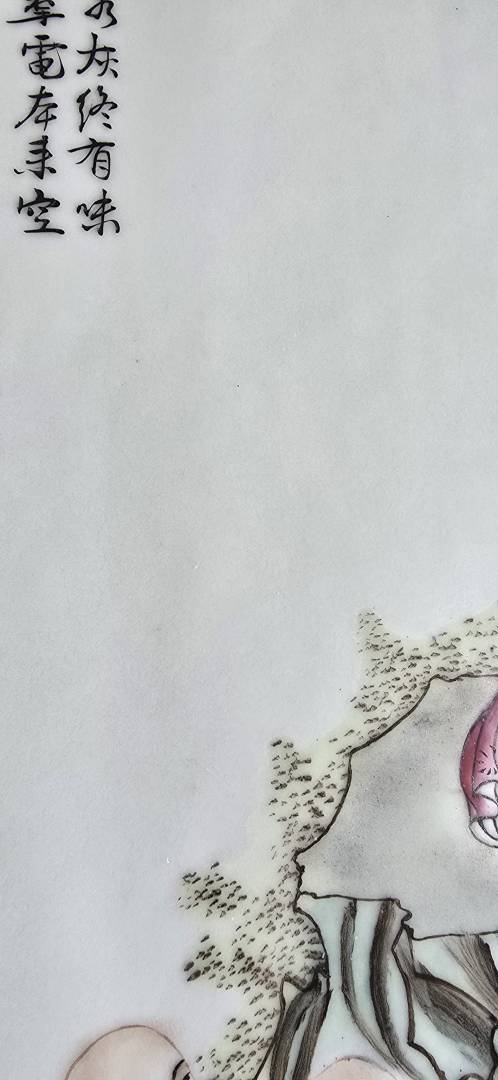
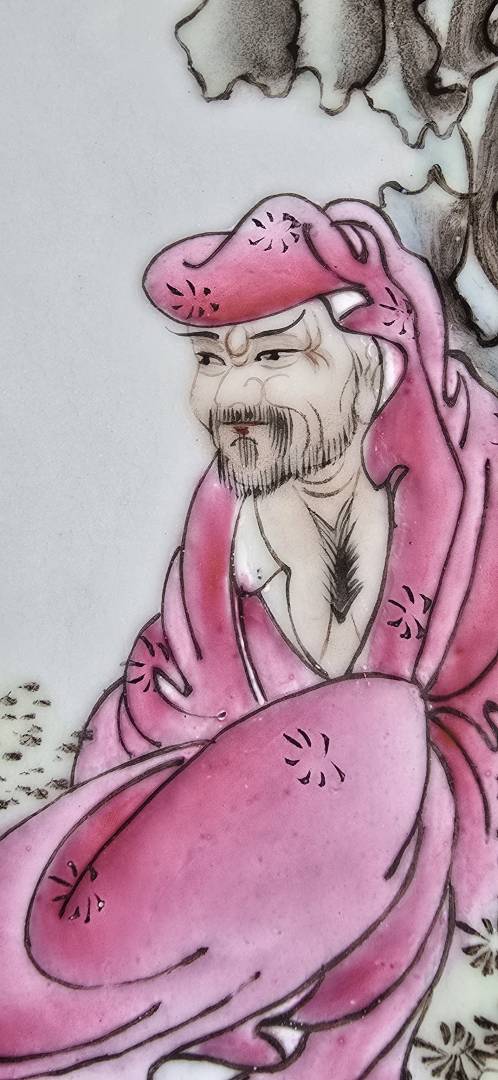
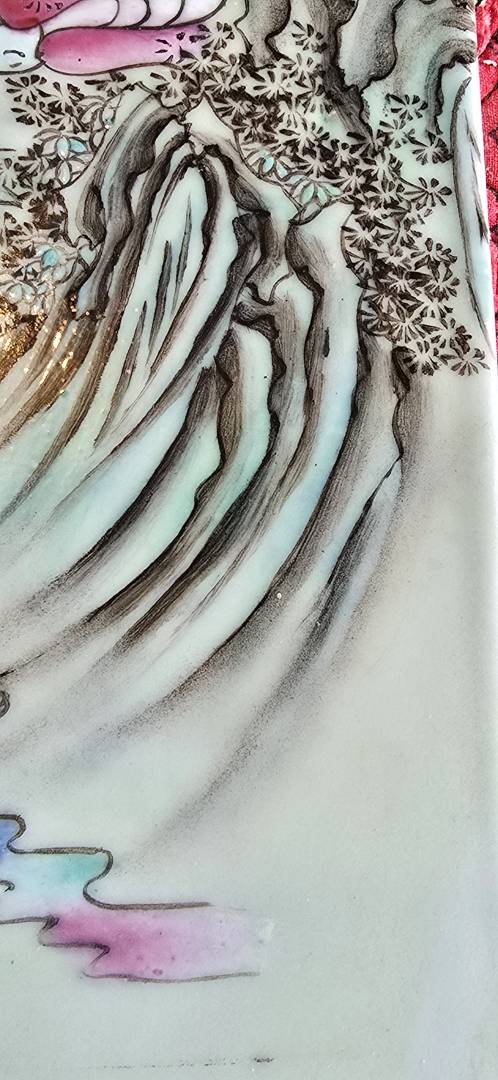
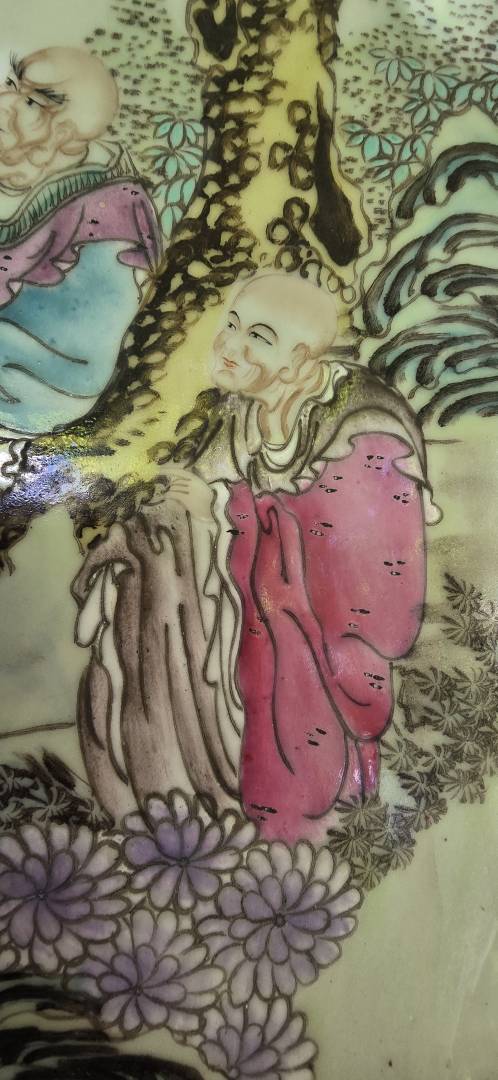
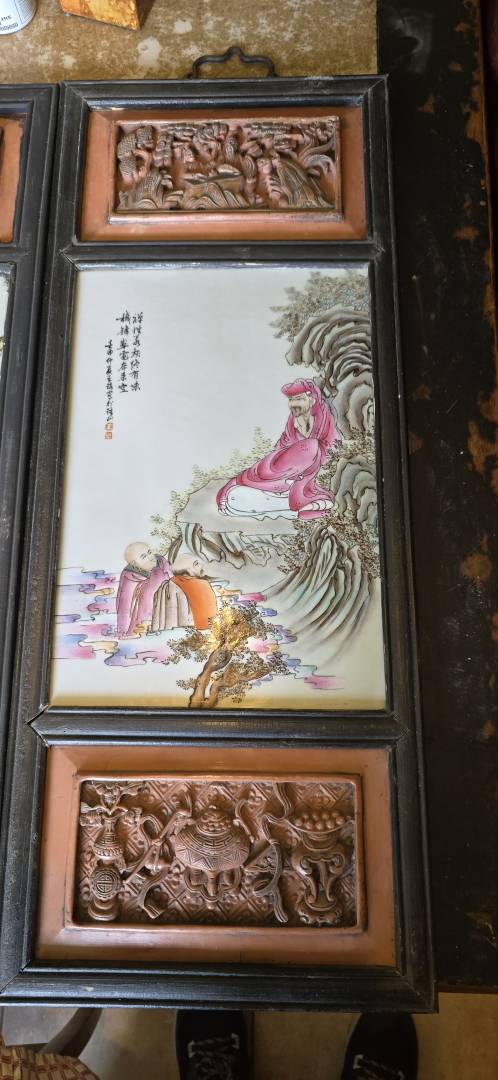
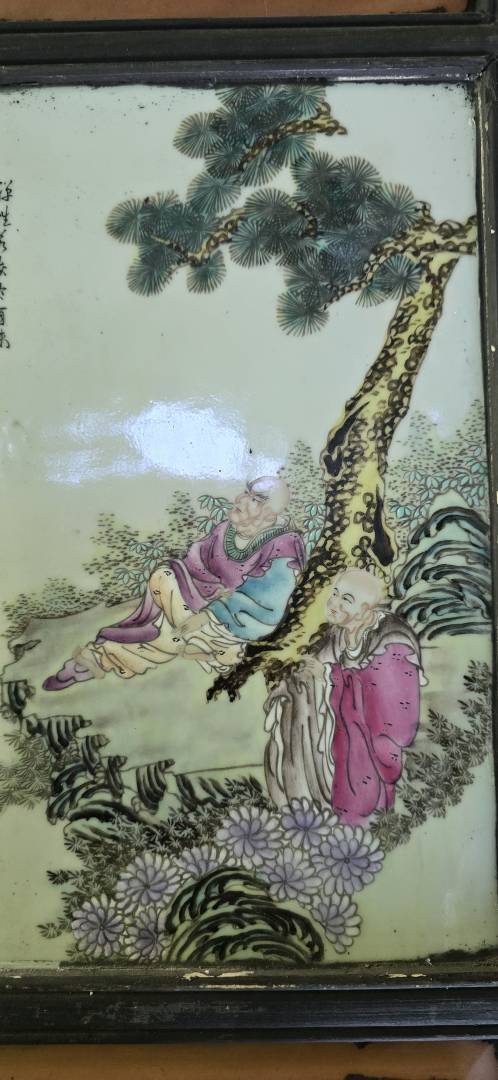
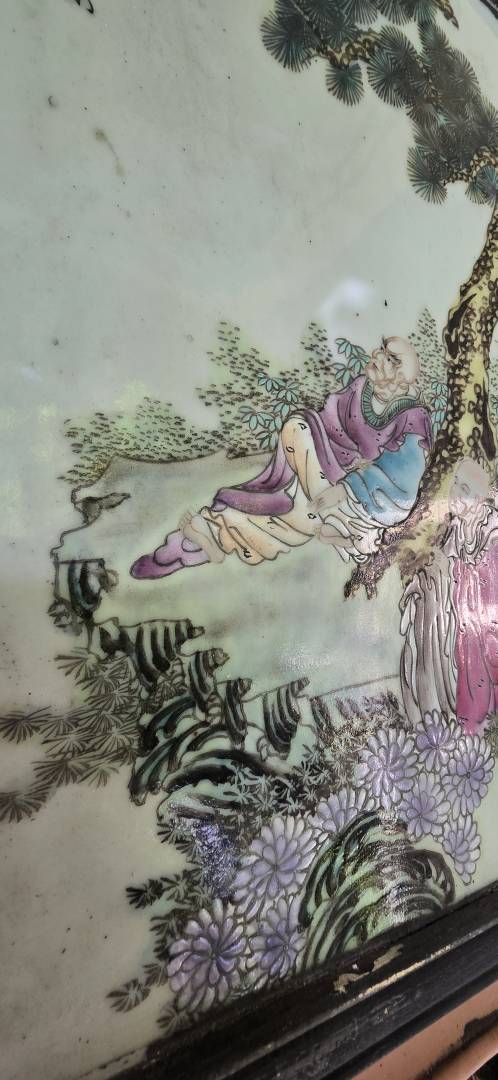
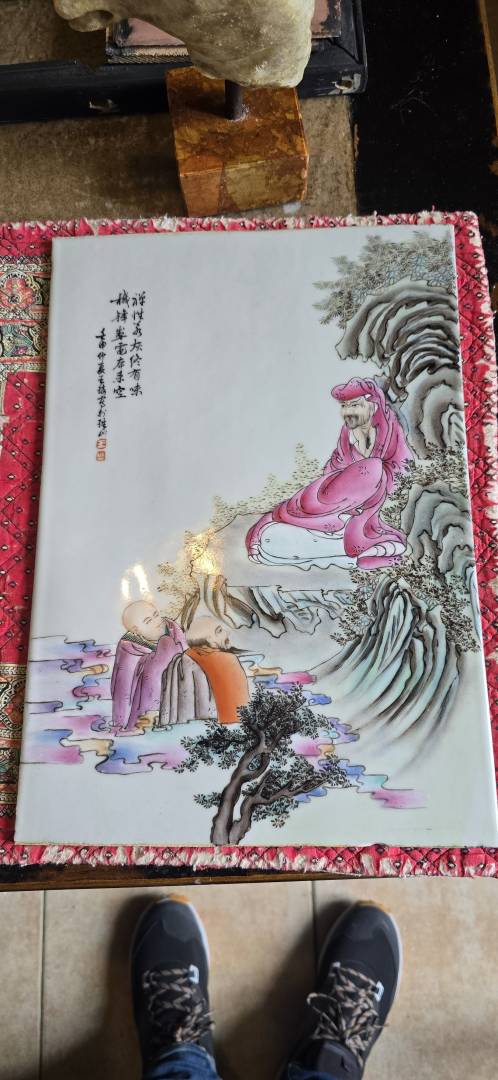
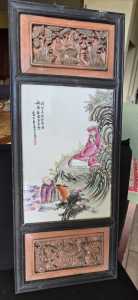
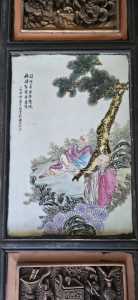
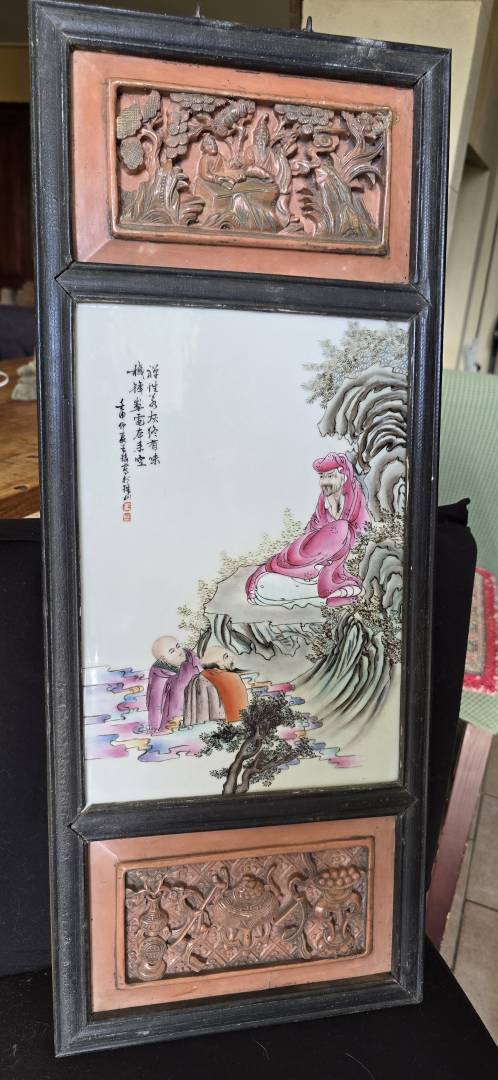
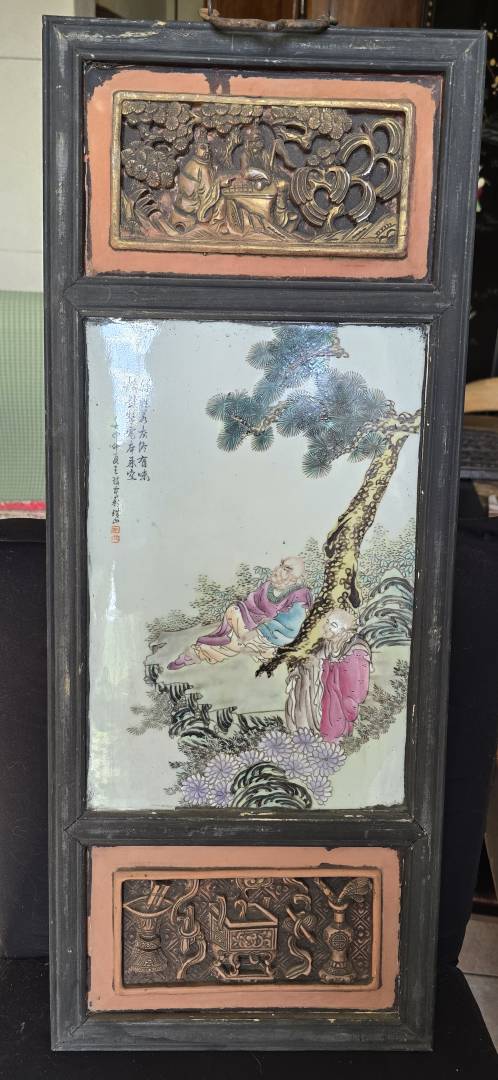
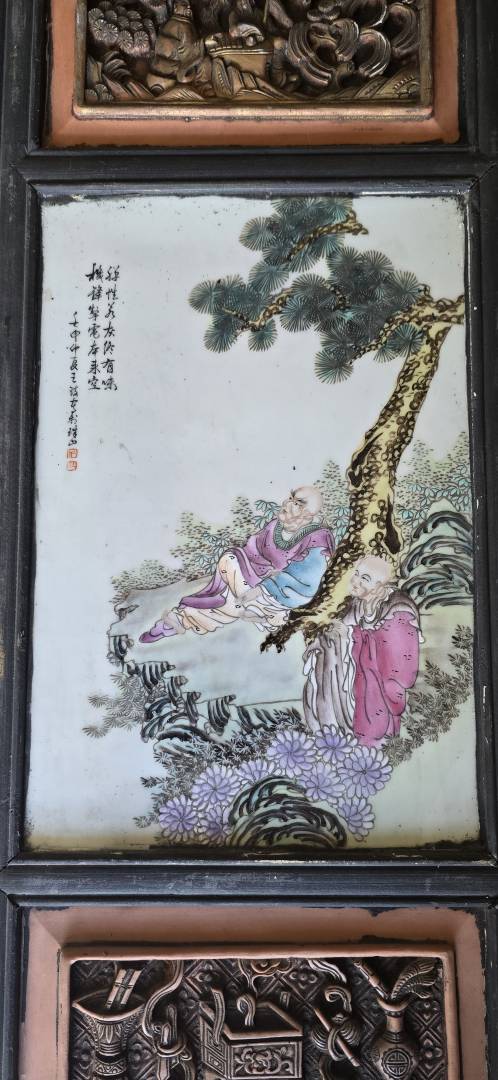
Hello everyone. I am seeking expert opinions on a pair of Chinese porcelain plaques, traditionally mounted in wood frames. I have provided photos of the first panel fully assembled , and a second set of photos showing the second panel disassembled to allow for a closer inspection of the porcelain and the mounting components.
The Porcelain Plaques:
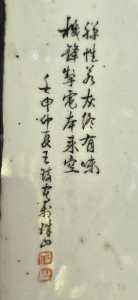
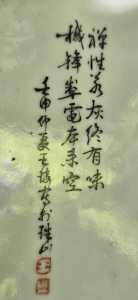
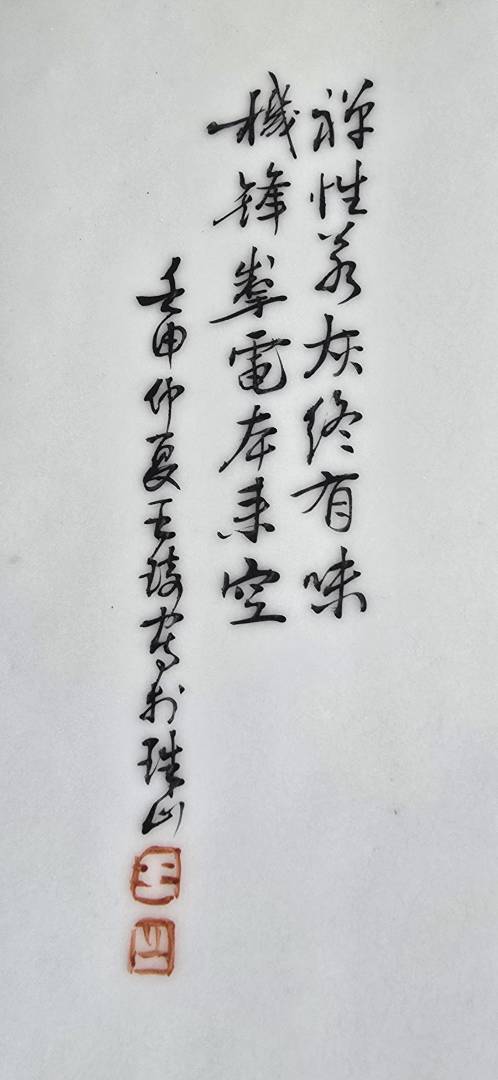
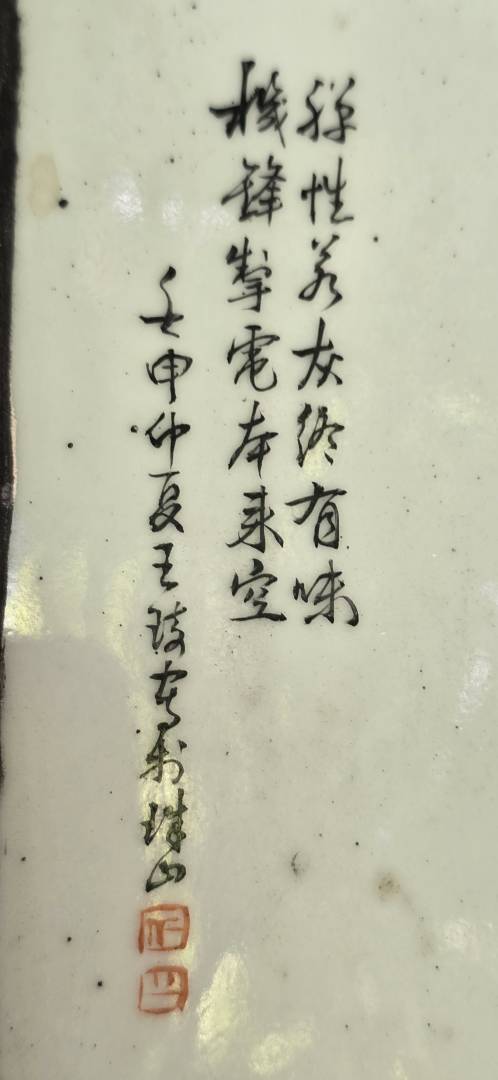
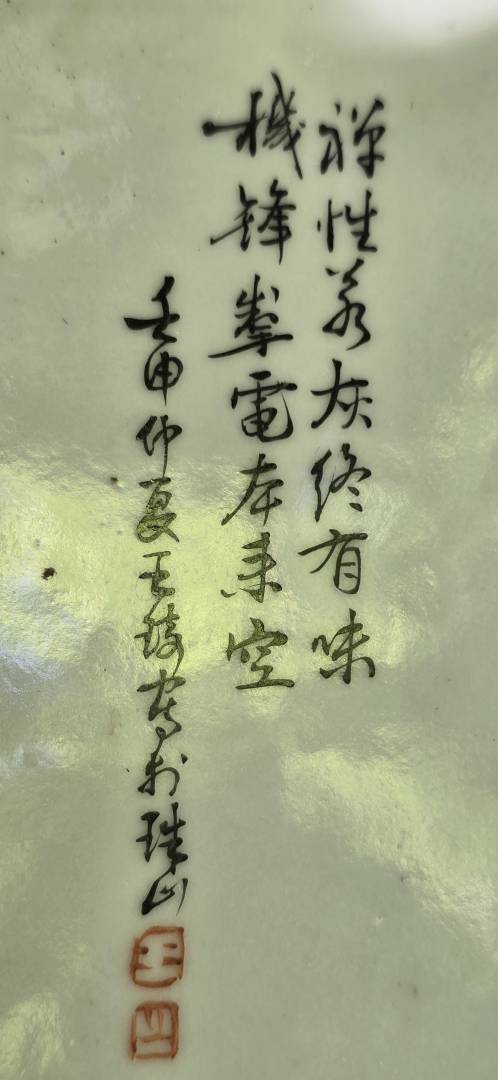
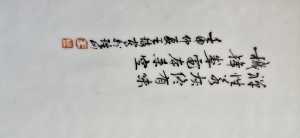
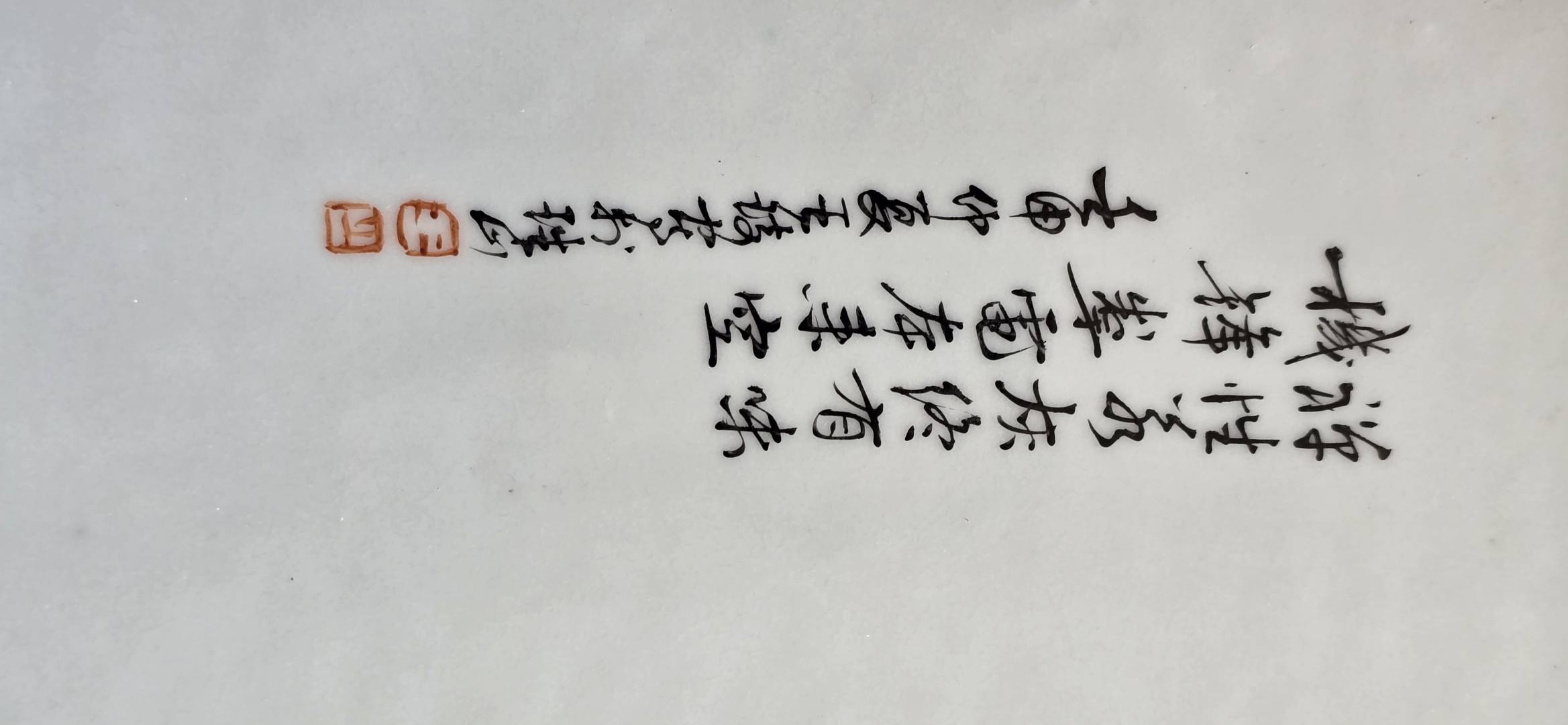
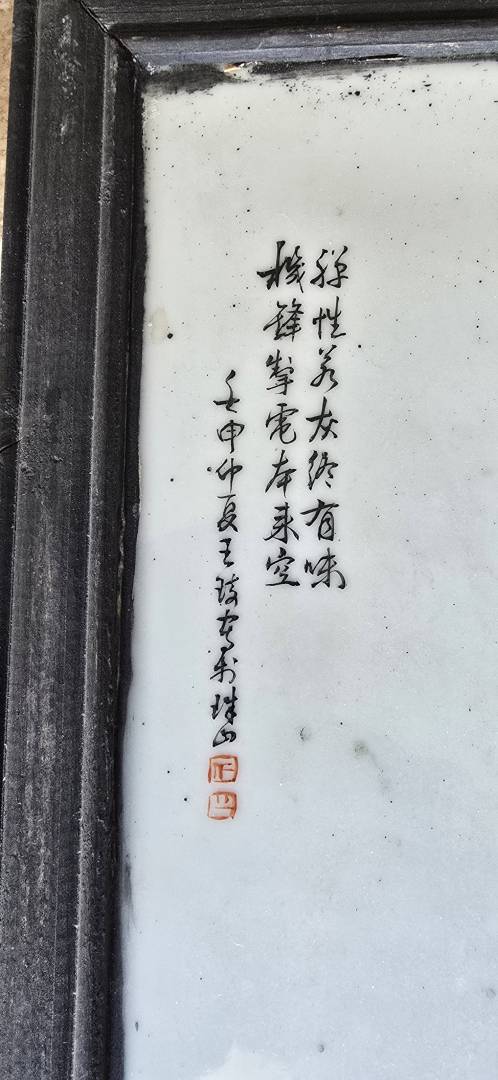
- Artist: Both are signed Wang Qi (王琦), leader of the "Eight Friends of Zhushan."
- Date: The inscriptions are dated Renshen (壬申) year, mid-summer (1932).
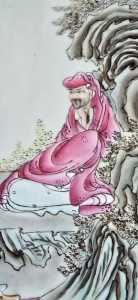
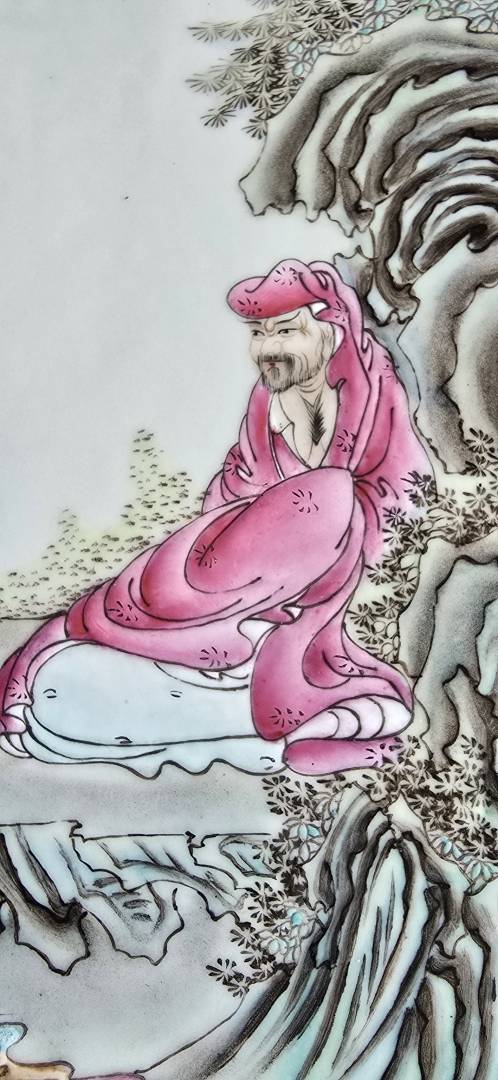
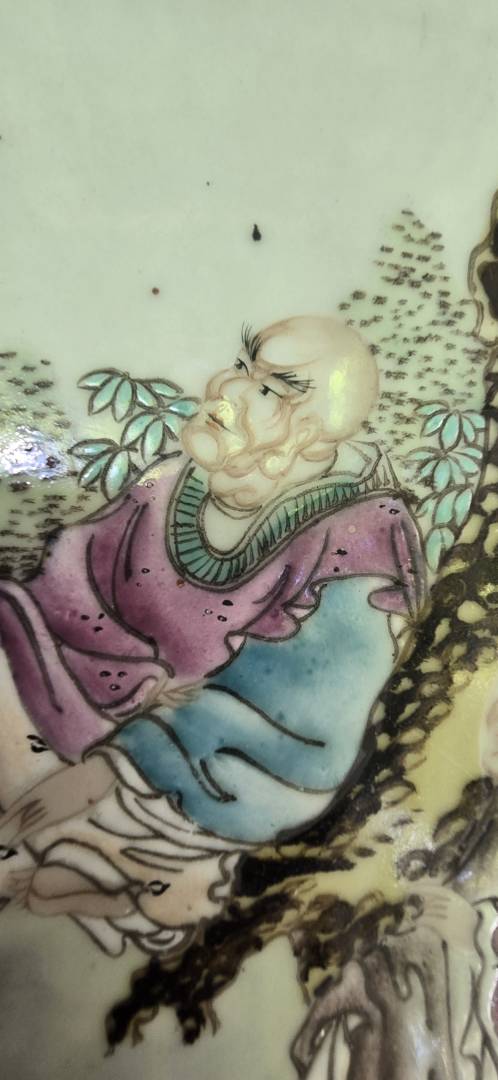
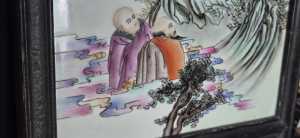
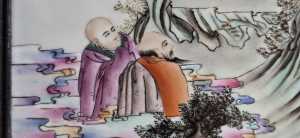
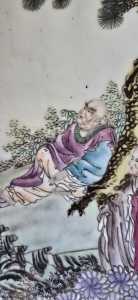
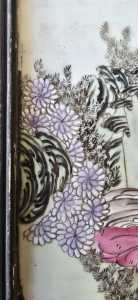
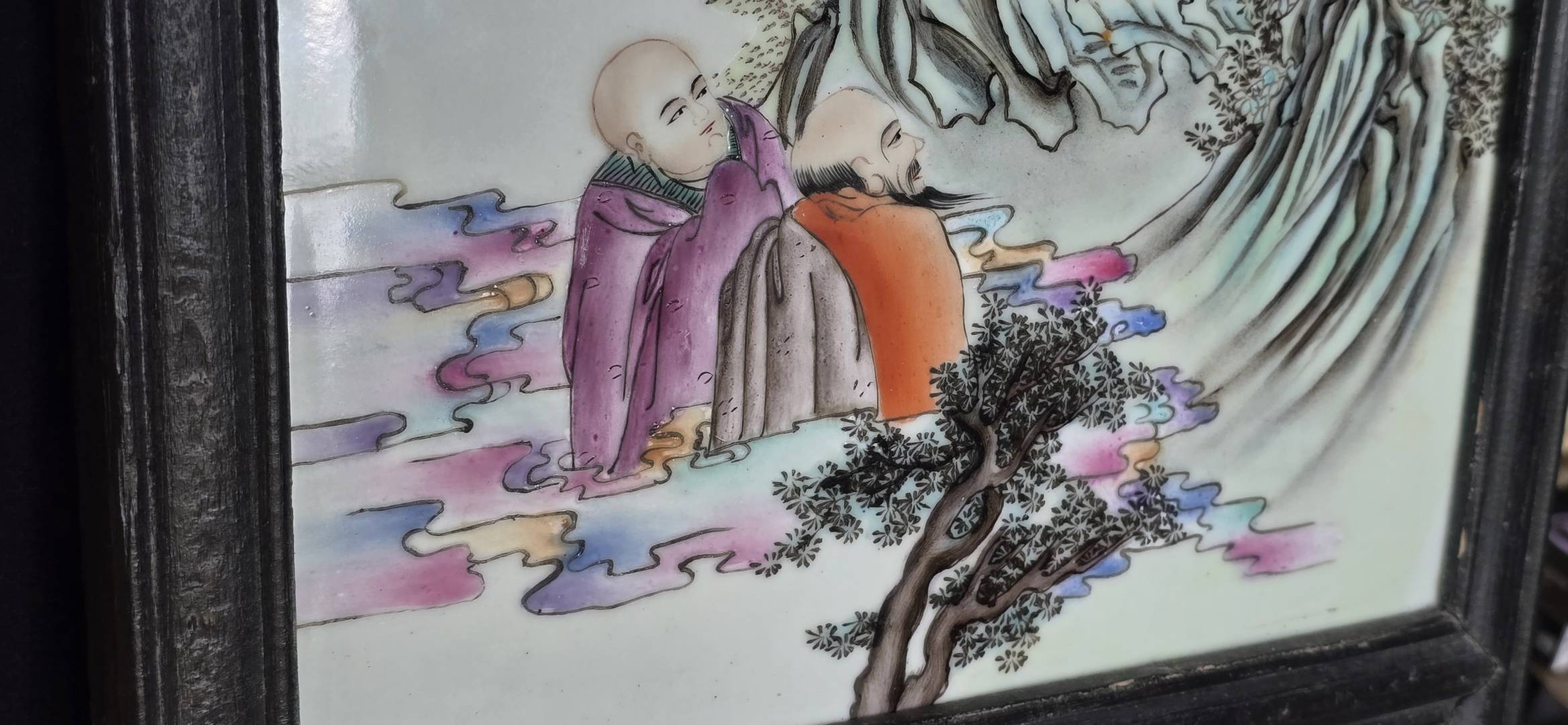
- Subject: Finely executed Famille Rose depictions of Buddhist Arhats (Luohans). The faces show the distinctive shading for which Wang Qi is famous.
- Dimensions:
- Individual porcelain plaque: 36 cm x 25 cm.
- Full frame (complete): 73 cm x 29 cm.
The "Composite" Decorative Panels:
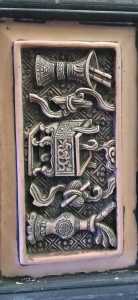
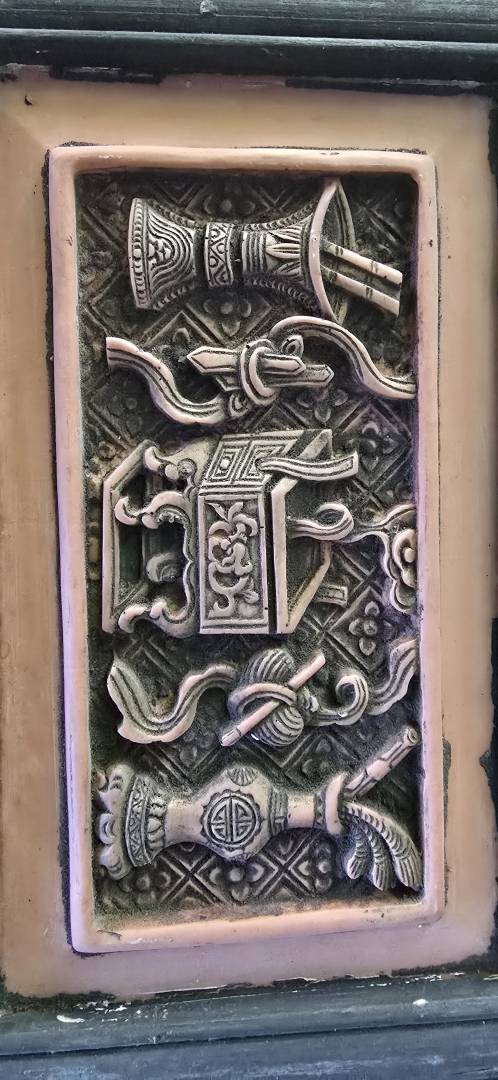
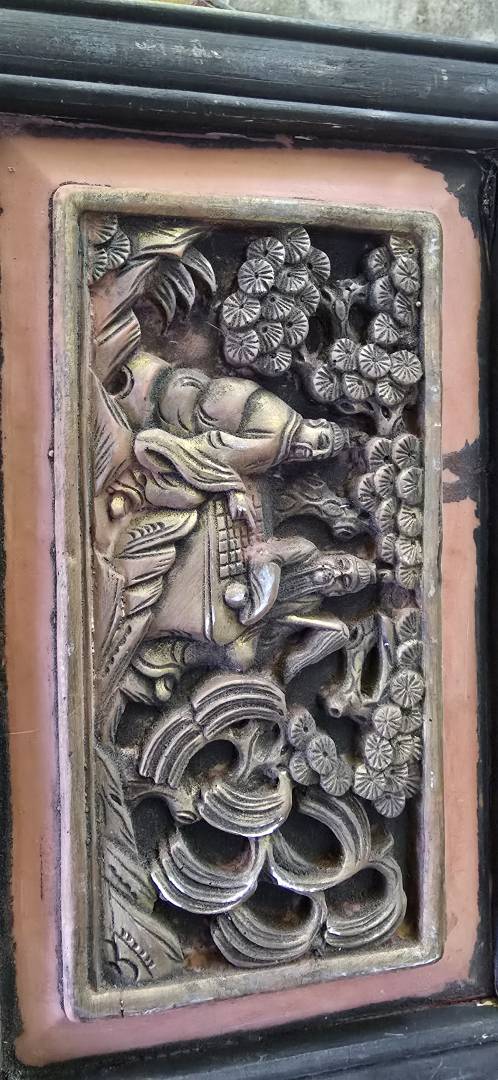
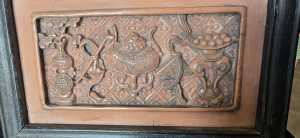
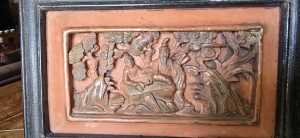
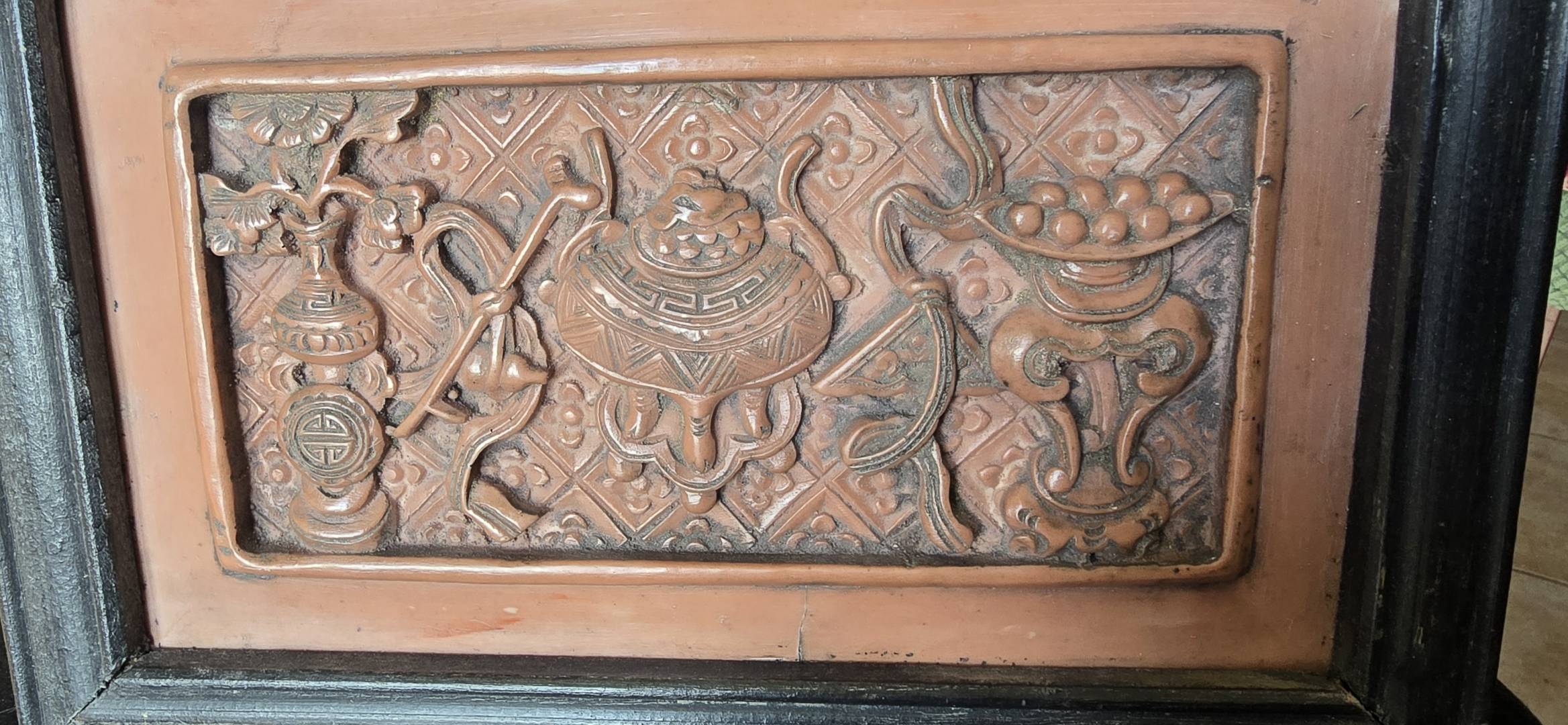
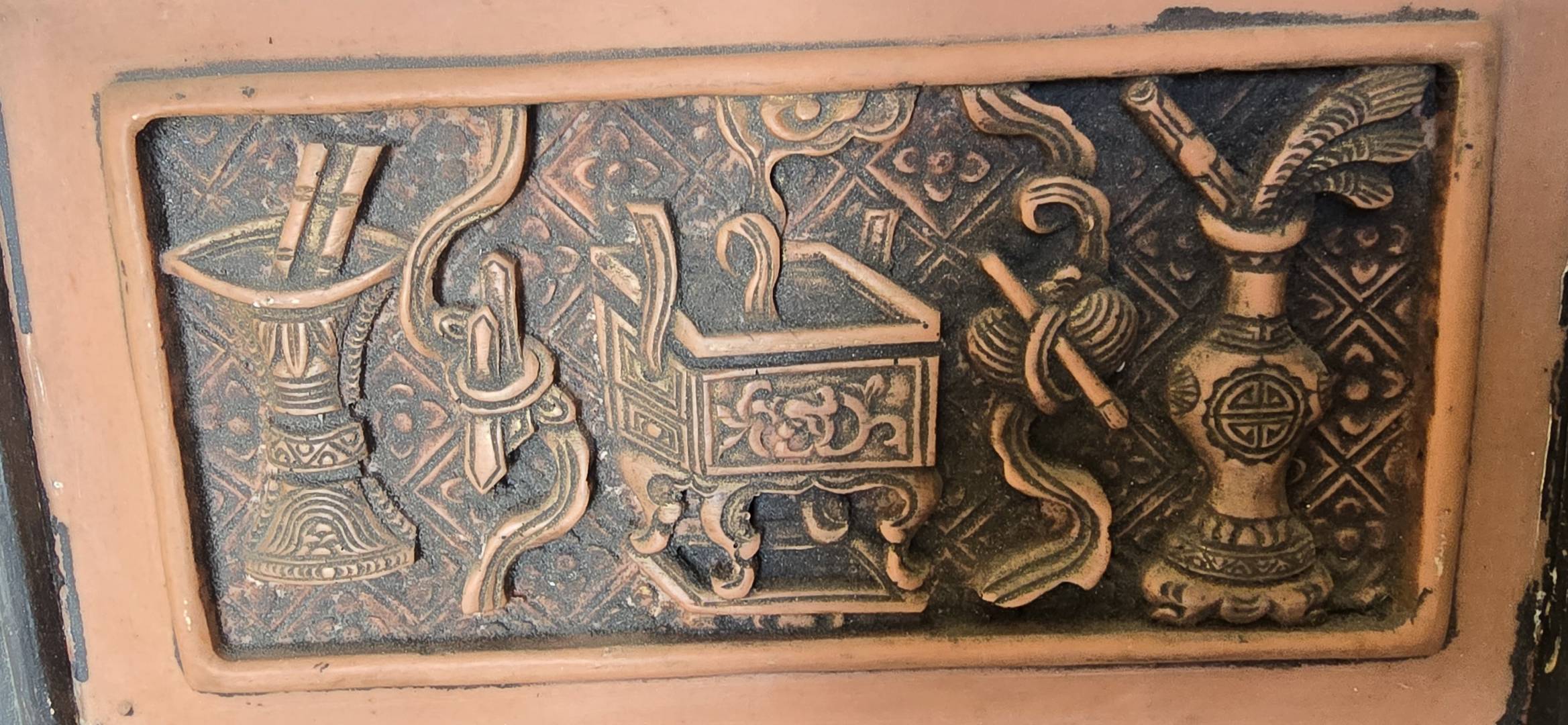
Each frame features a decorative panel above and below the central porcelain.
- Visuals: One frame remains intact, showing how the porcelain is integrated with these red decorative elements.
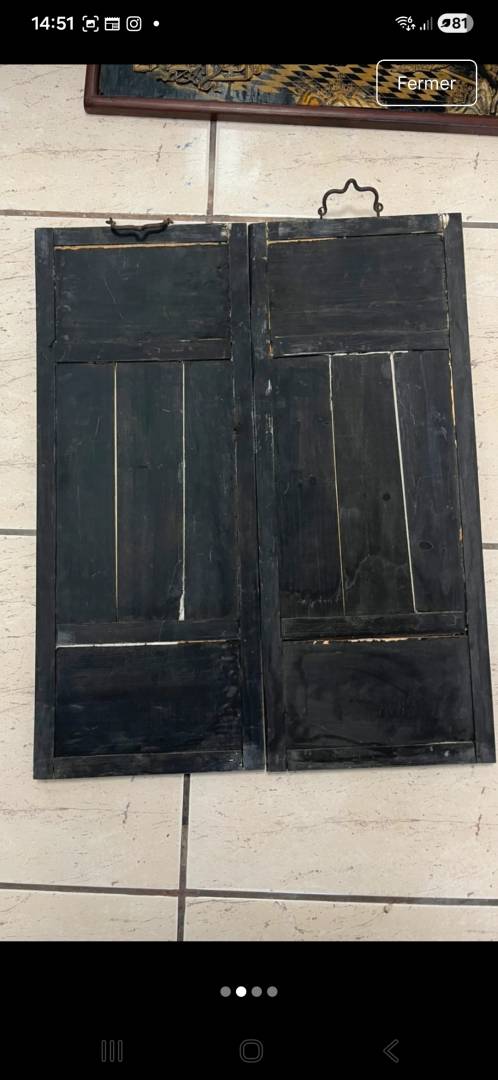
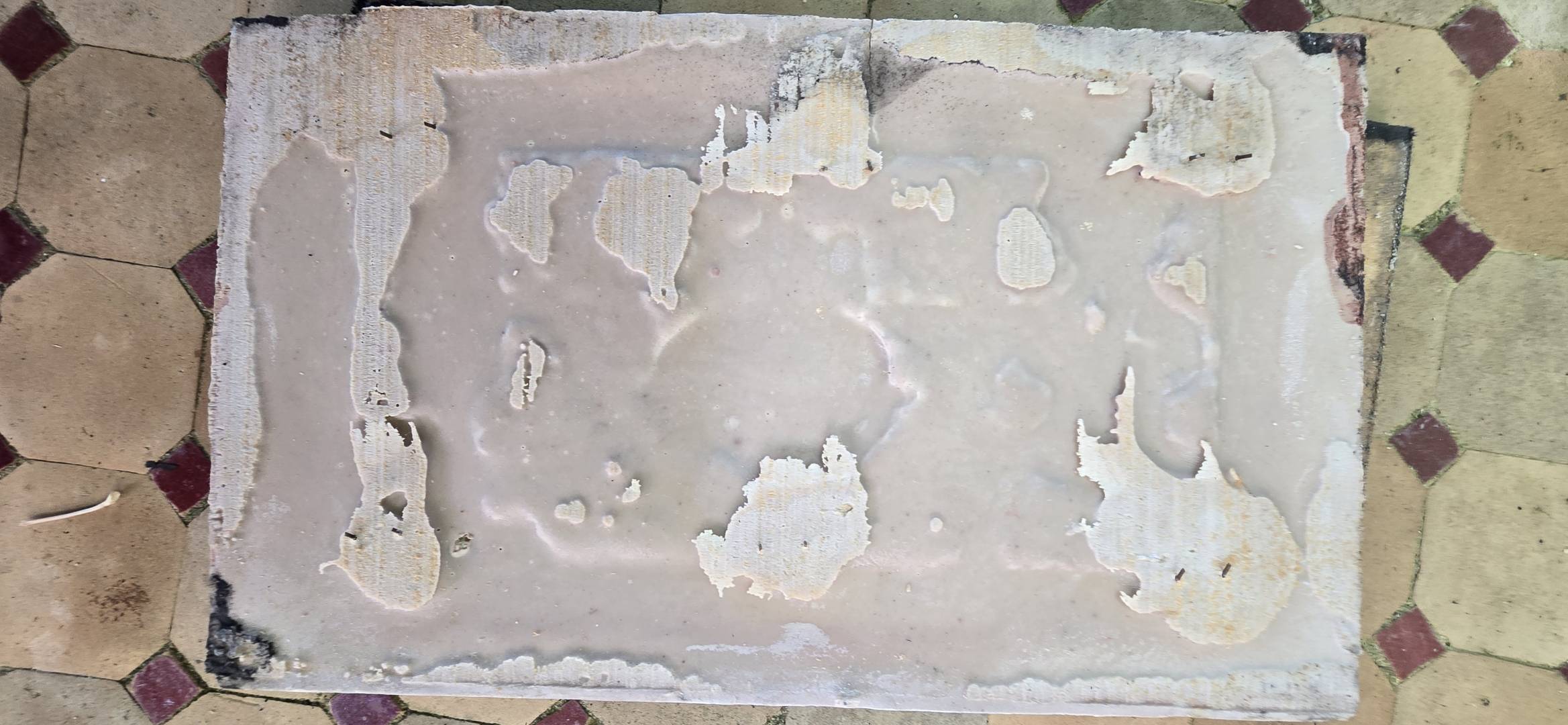
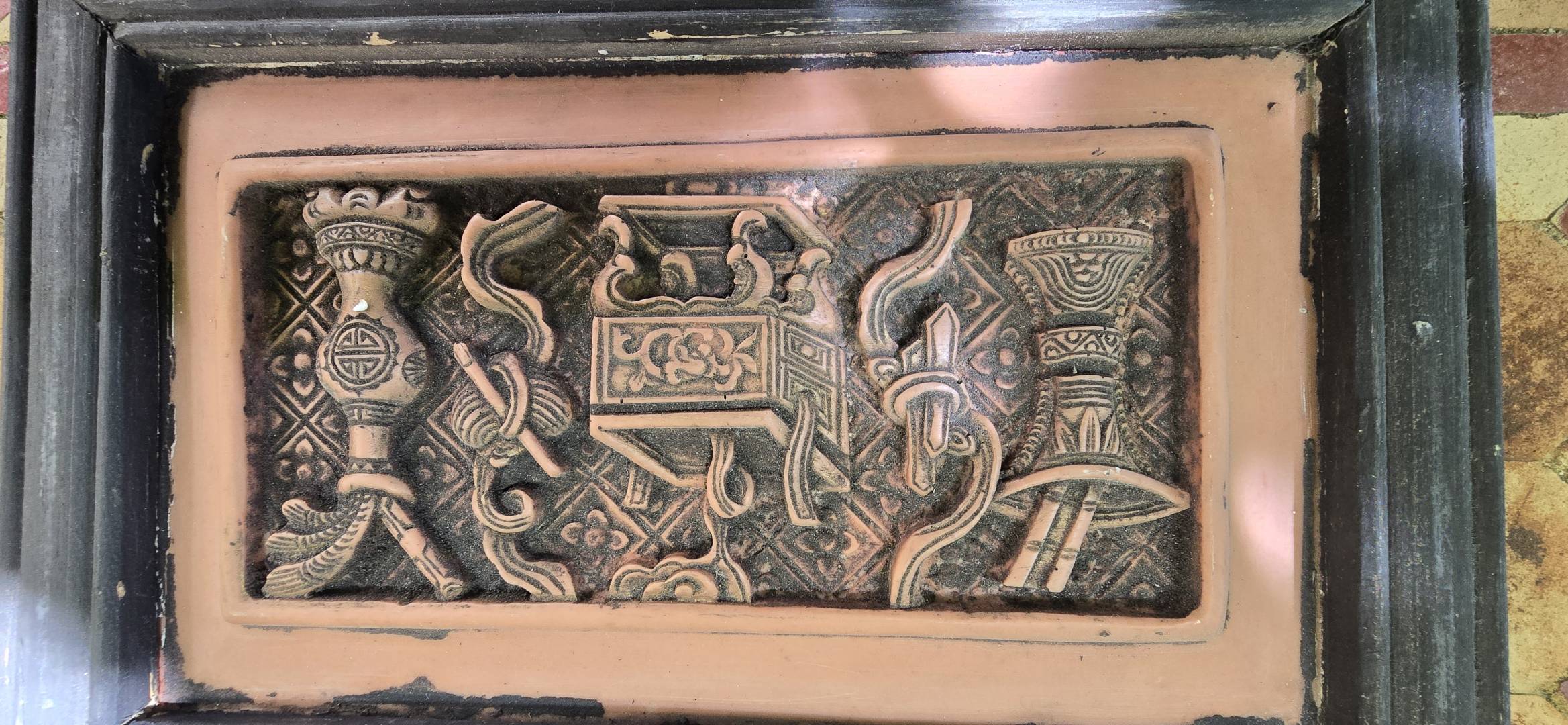
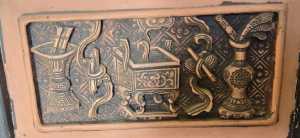
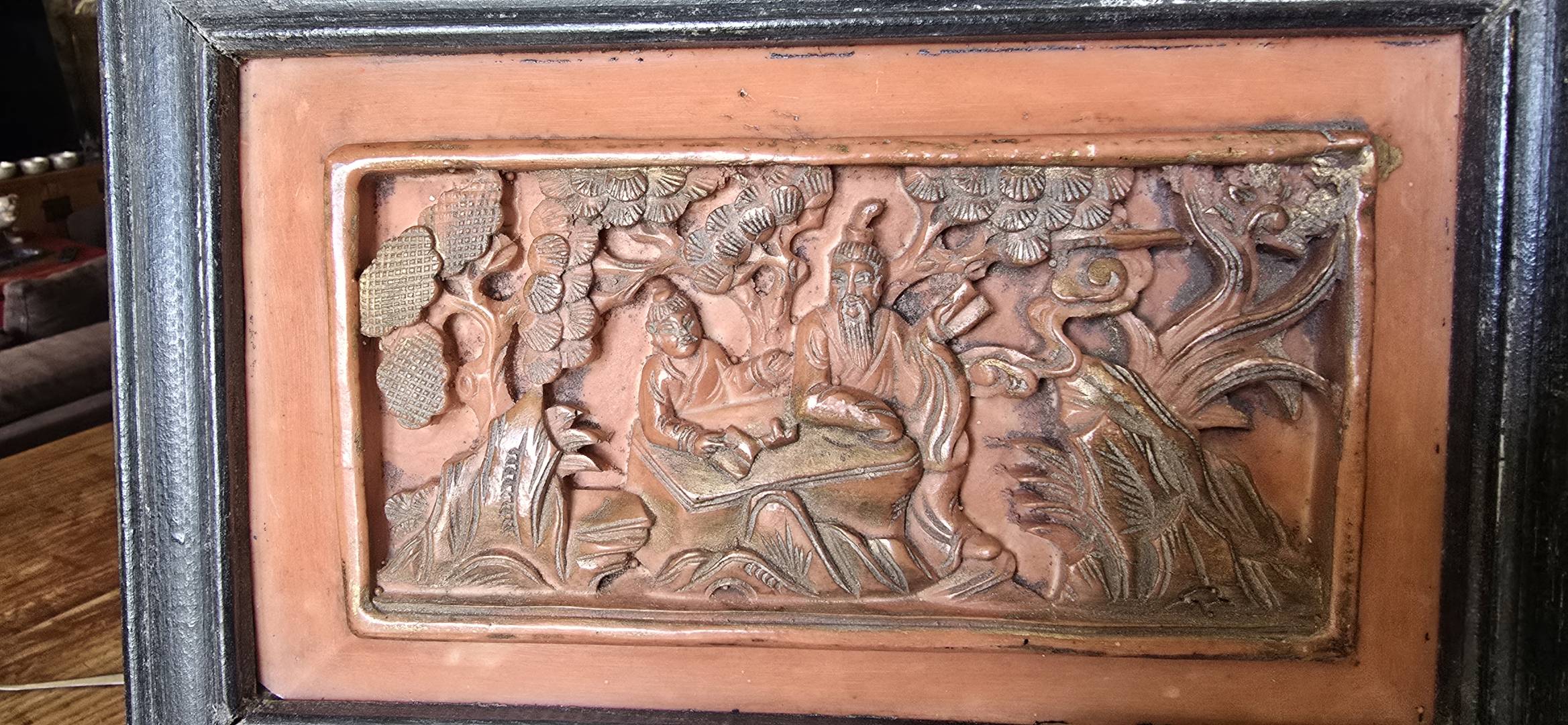
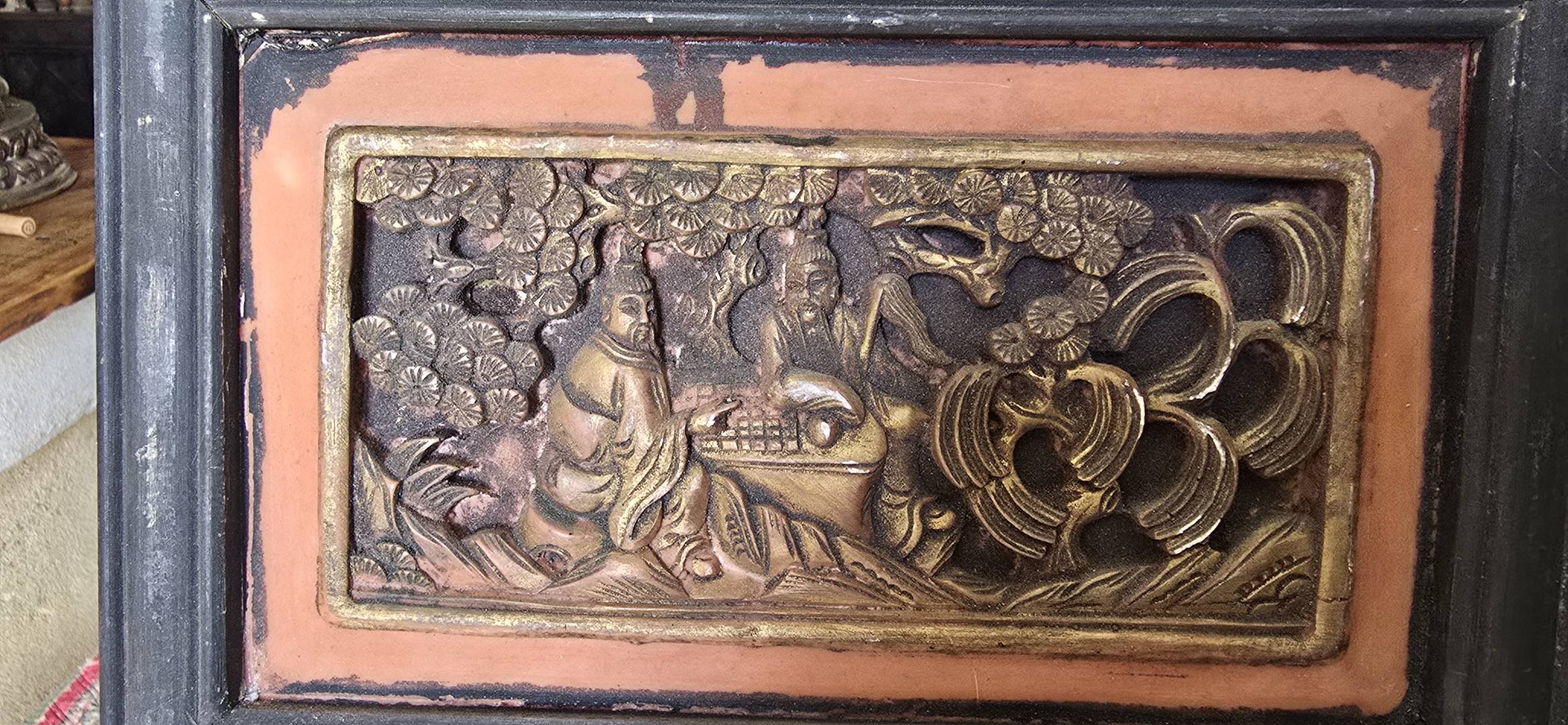
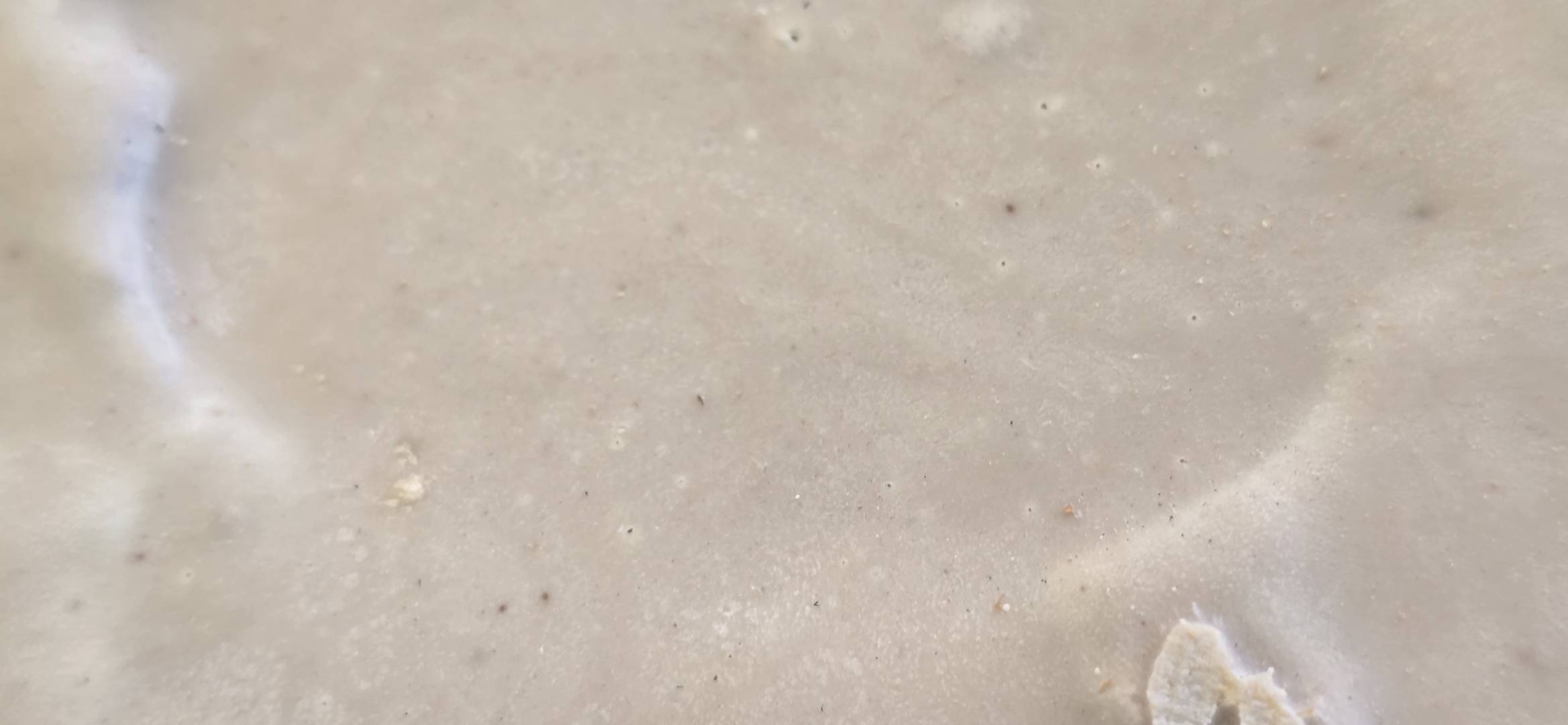
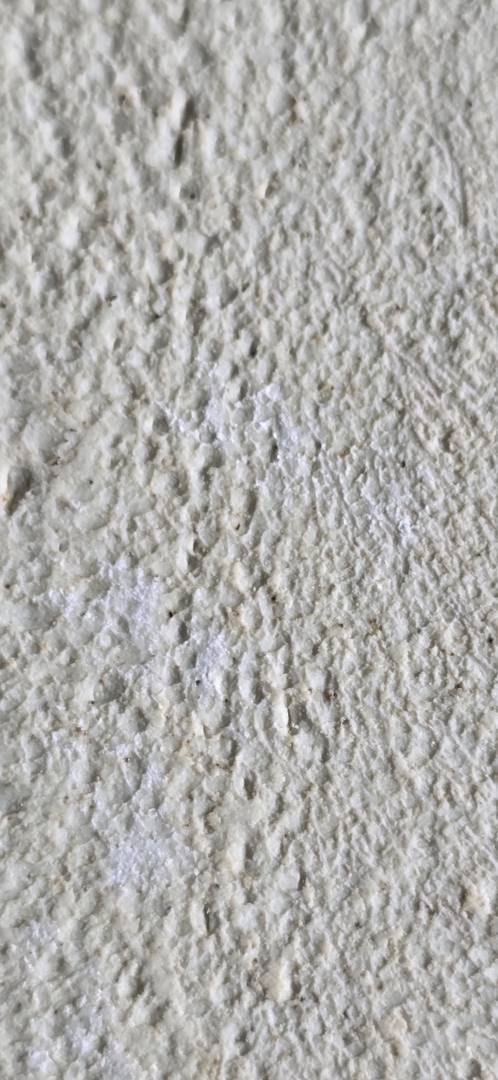
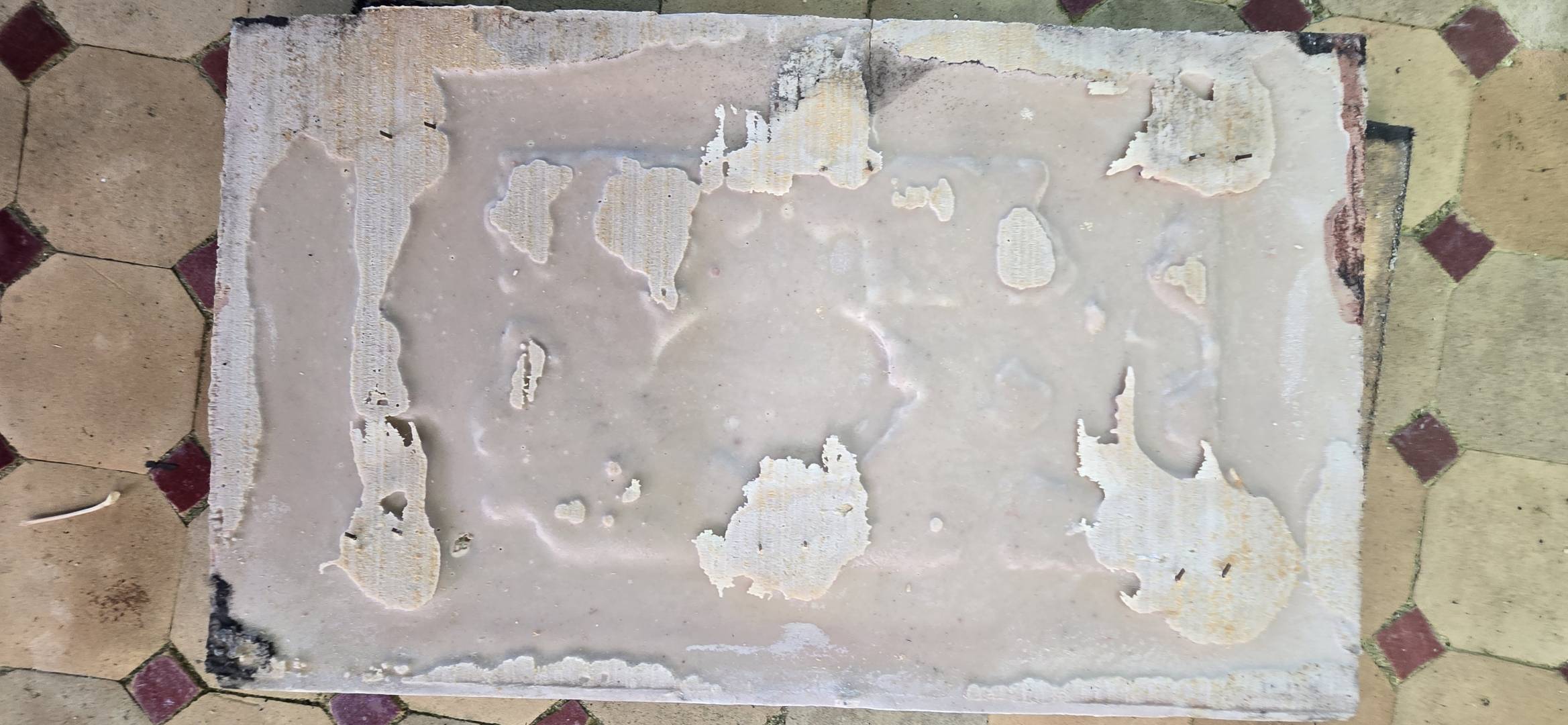
- Material Analysis: I have disassembled the second frame to examine these pieces. They appear to be a molded cinnabar-colored composite (possibly a lacquer-based paste or tushao).
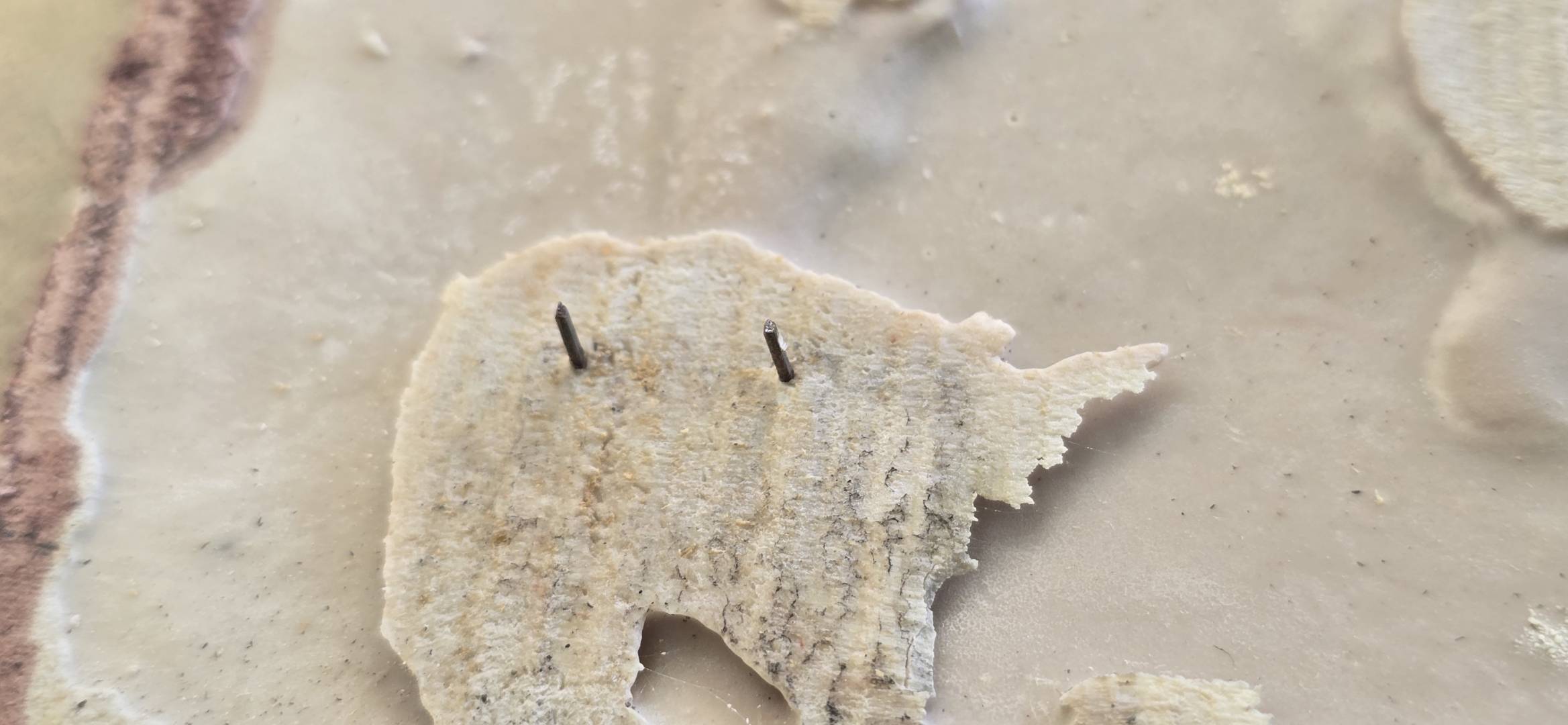
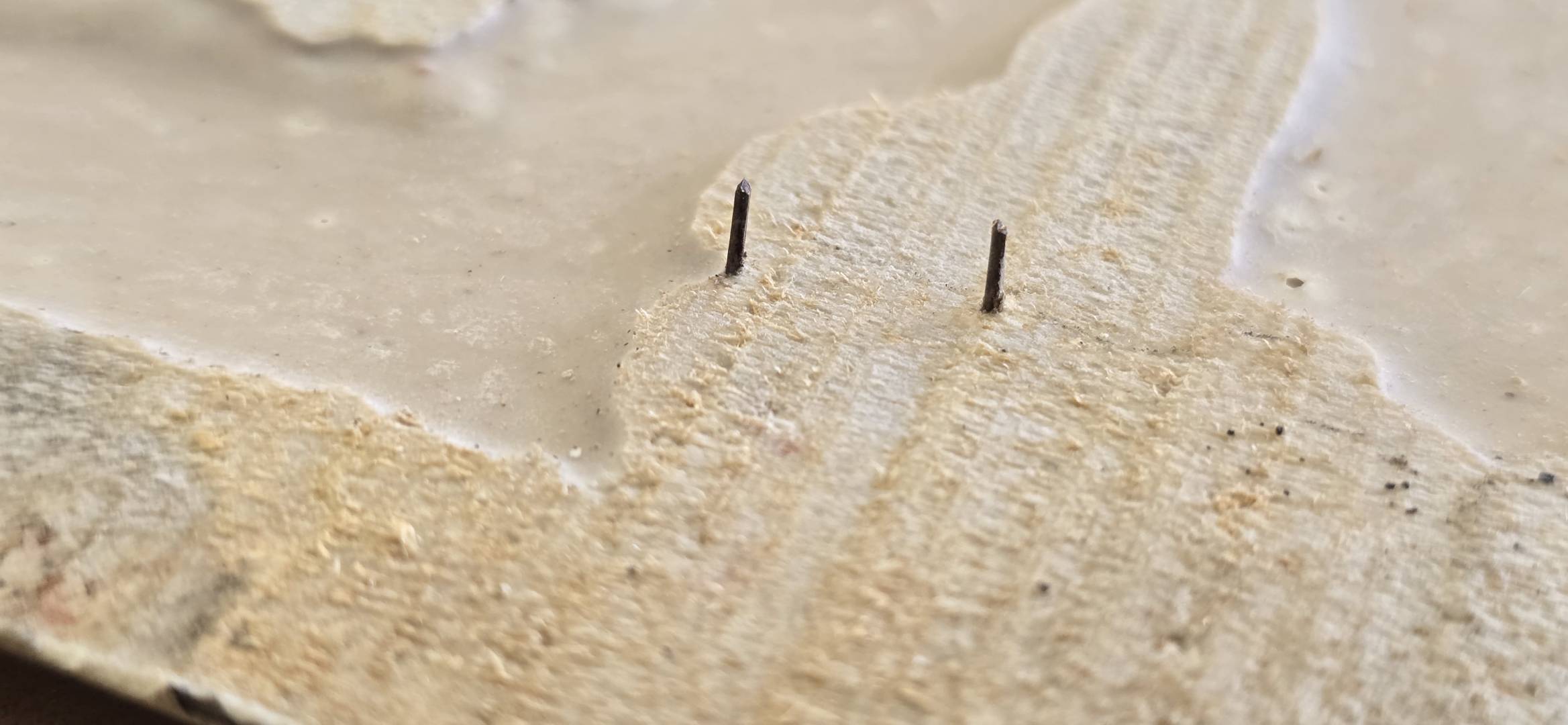
- Construction: As seen in the close-up photos,
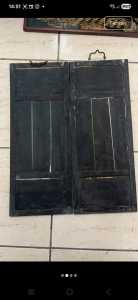
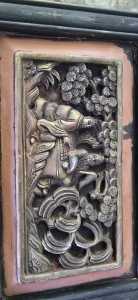
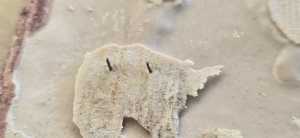
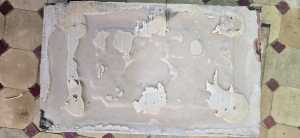
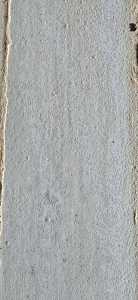
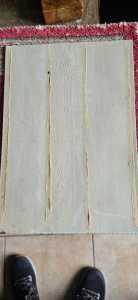
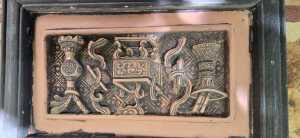
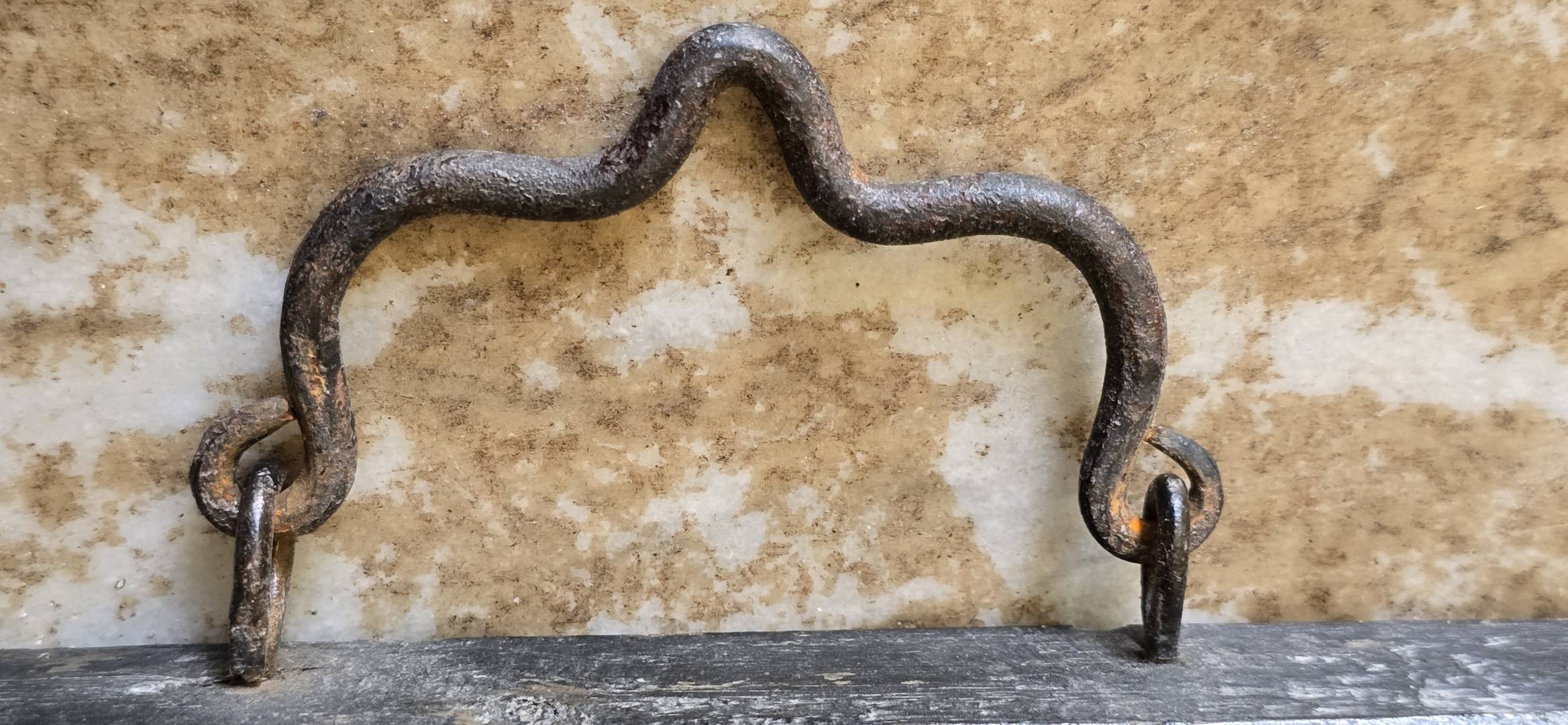
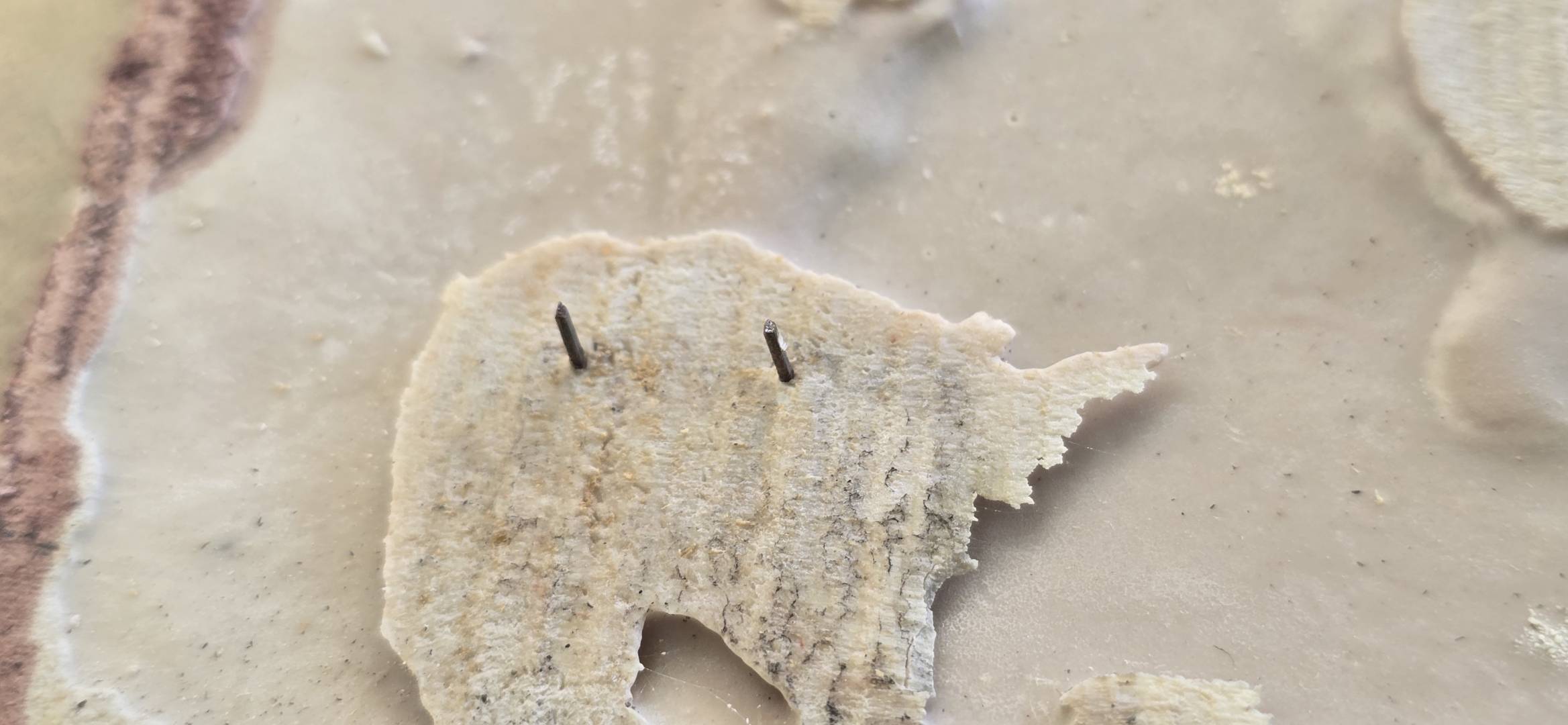
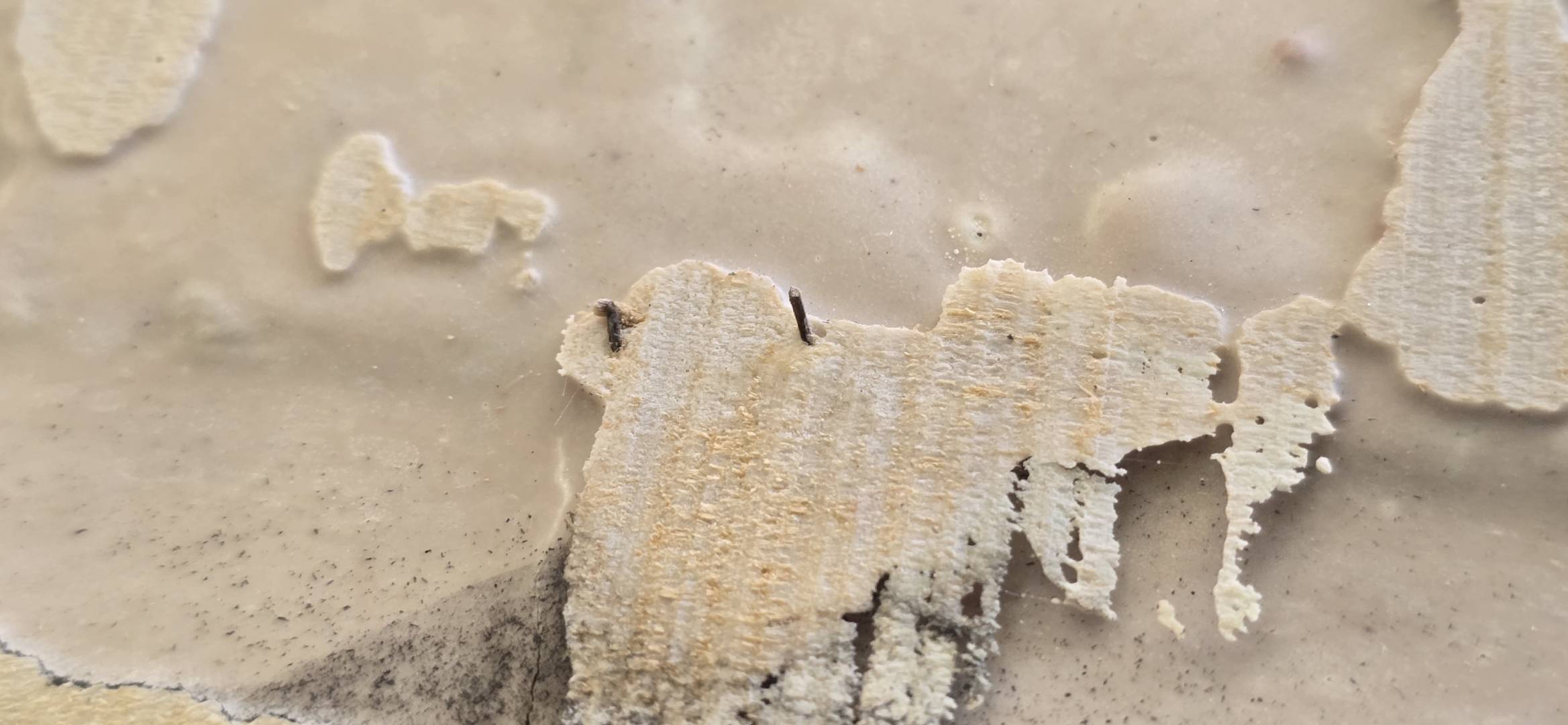
these panels were secured to the wooden backing using small iron pins.
Key Questions for the Community:
- Hand of the Master vs. Workshop: Given that these are a pair dated 1932, do the brushwork and calligraphy look consistent with Wang Qi’s personal hand, or should these be attributed to a high-level contemporary studio?
- Mounting Style: Is this specific combination of porcelain and molded cinnabar-paste panels a recognized mounting style from the Republic Period?
- Material Confirmation: Can anyone confirm the exact composition of the red panels?
Thank you very much in advance to anyone who can provide information or insights regarding these pieces.

Hi Philippe, welcome to the forum. Your pictures don't enlarge well, but to me the painting quality looks rather average. The framing is nice and the pieces might indeed date from 1932. Mark is an expert for these paintings and will surely know more
Birgit

Hi Philippe,
Firstiy welcome to this great forum.
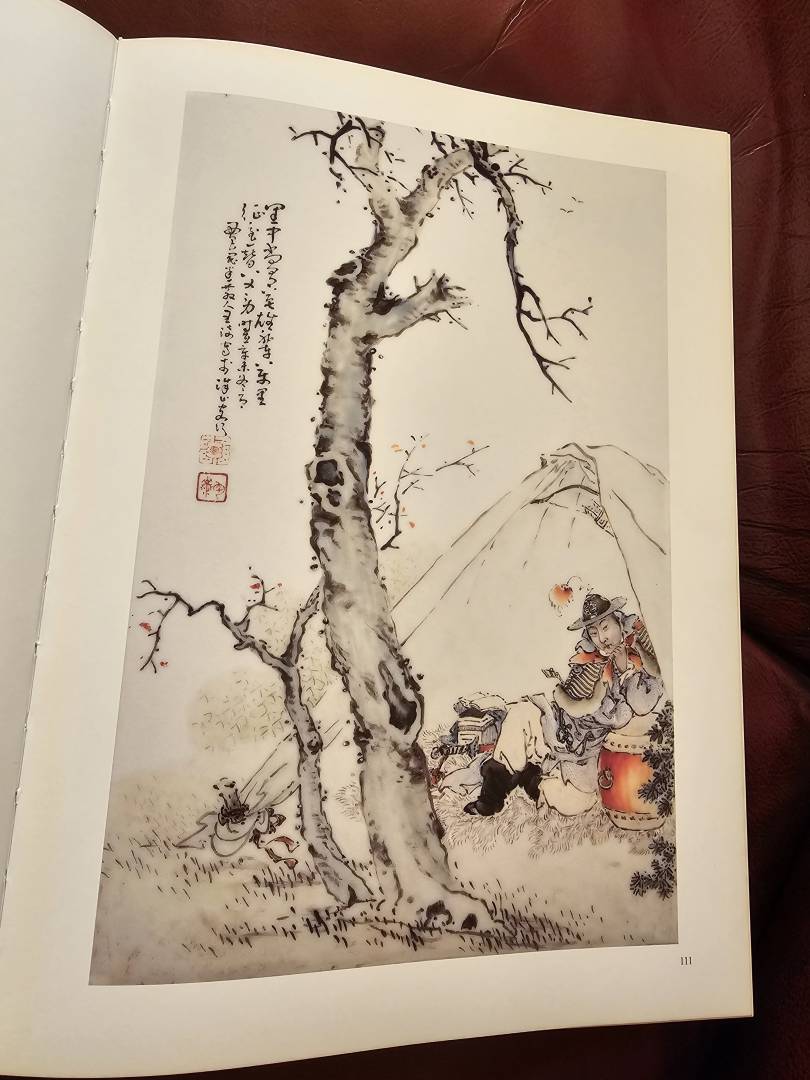
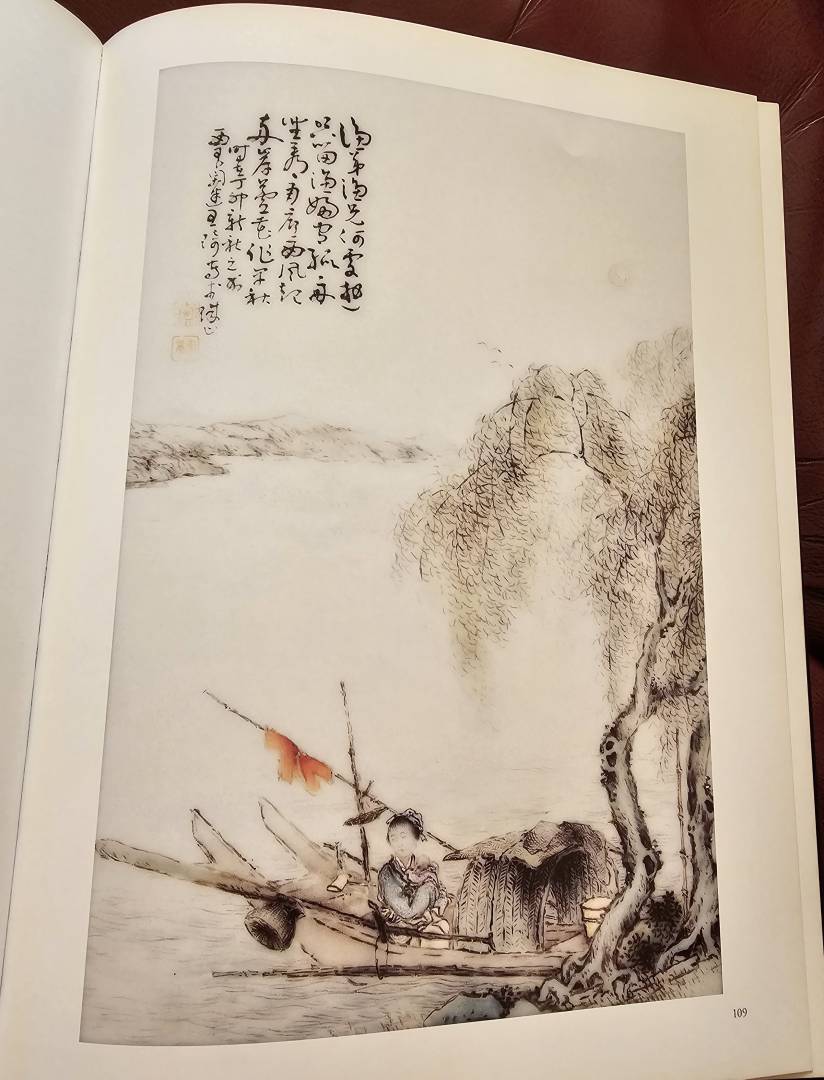
It is my opinion that this work is not from the master Wang Qi (who died in 1937). It is a copy or attribute to him and without seeing the back of the plaque it is probable to be around 60's - 80's.
The style of the calligraphy is wrong as are the read marks (seals).
Wang Qi had a very distinct way of paintimg especially with the way of clothing effects which id not seen on yours.
I have attached 2 copies for you to examine.
If this was genuine it would have been quite the find.
Mark
Thank you, Mark and Shinigami, for your feedback. However, I must state clearly that I do not agree with the suggestion that these plaques date from the 1960s-80s. I am not a specialist in Republic-era porcelain specifically, but I have been a collector of Asian art for over 35 years. My core collection focuses on Cloisonné, Bronzes, Jades, and Chinese Archaeology (including archaic jades and Han/Tang statuary). Managing a collection of several thousand pieces for decades has given me the experience to distinguish between modern industrial production and genuine period craftsmanship. Based on the material evidence, I am convinced these are contemporary to the Wang Qi era (circa 1932).
- The Frames & Finish: The wooden frames were crudely overpainted in black at some point, obscuring the original finish. Upon closer inspection, I found traces of water-gilding and gold emulsion beneath layers of 'bronzine' and grime, suggesting these were originally high-end, gilded displays that suffered from poor storage or humidity.
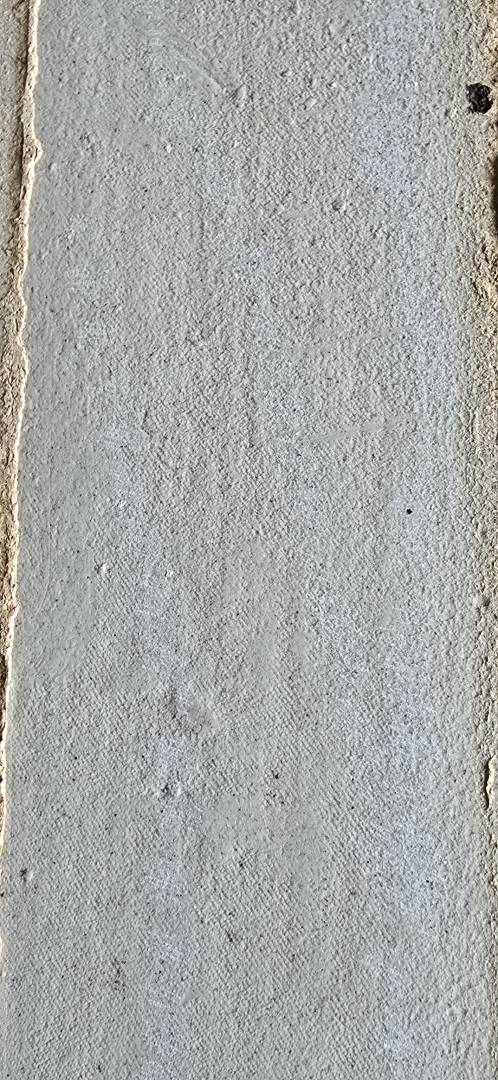
- The Composite Panels (Dui Shuo): The top and bottom relief sections are not resin. They are made of a traditional mineral-and-lacquer composite (often a mixture of lime, organic glue, and pigments) designed to imitate carved wood or zitan. In the 1920s and 30s, this 'trompe-l’œil' technique was a hallmark of luxury commissions and was highly prized as a demonstration of artisan virtuosity.
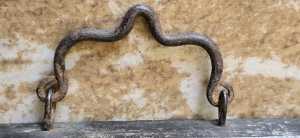
- Structural Evidence: The reverse reveals hand-forged iron spikes integrated directly into the composite mass during molding to secure them to the frame—a technique completely absent in 1960s-80s reproductions, which rely on modern adhesives or simple screws.
- I am providing new, high-quality photos to illustrate my findings:
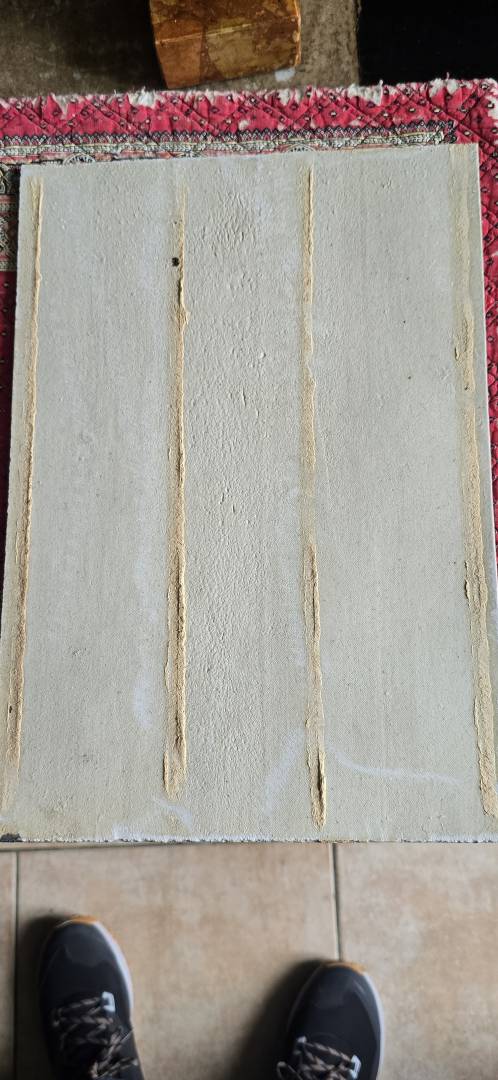
- The Restored Panel: I have completely dismantled, cleaned, and reassembled one of the panels. I had to remove the thick layers of crude black overpaint that had been added later. This process unfortunately removed the degraded layers of bronzine and gold emulsion, but it revealed the original raw composite material, which is tinted in a deep red. In my opinion, exposing this original texture is far preferable.
- The Unrestored Panel: For comparison, I have included photos of the second panel, which remains untouched. You can clearly see the 'veil' of grime, the black paint overruns, and the heavy residues on the porcelain surface that I still have to clean.
- Hardware & Macros: I am providing macro shots, specifically of the mounting hooks. Their design, forging, and deep natural patina make it visually evident that these are not 1960s-80s components.
-
While I agree that Wang Qi’s early work is renowned for its extreme finesse, it is well-documented that after 1928, his style shifted toward a more expressive, 'untrammeled' (Xieyi) approach, heavily influenced by the painter Huang Shen.
-
Given the high quality of the materials and the technical complexity of the assembly, I am led to wonder about the exact origin of these pieces. If they are not from the Master’s own hand, could they be a high-end production from his direct studio (performed by his pupils) or perhaps from a contemporary workshop that specialized in his style at the time? I would be very interested to hear your thoughts on this possibility, as the level of craftsmanship clearly points to an elite commission of the period rather than a common imitation.
Thank you in advance for your further insights and for the quality of this exchange.
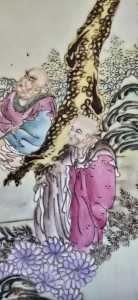
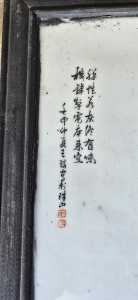
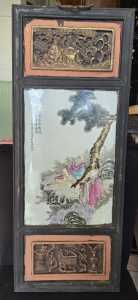
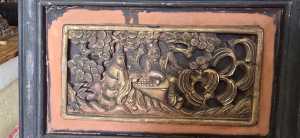
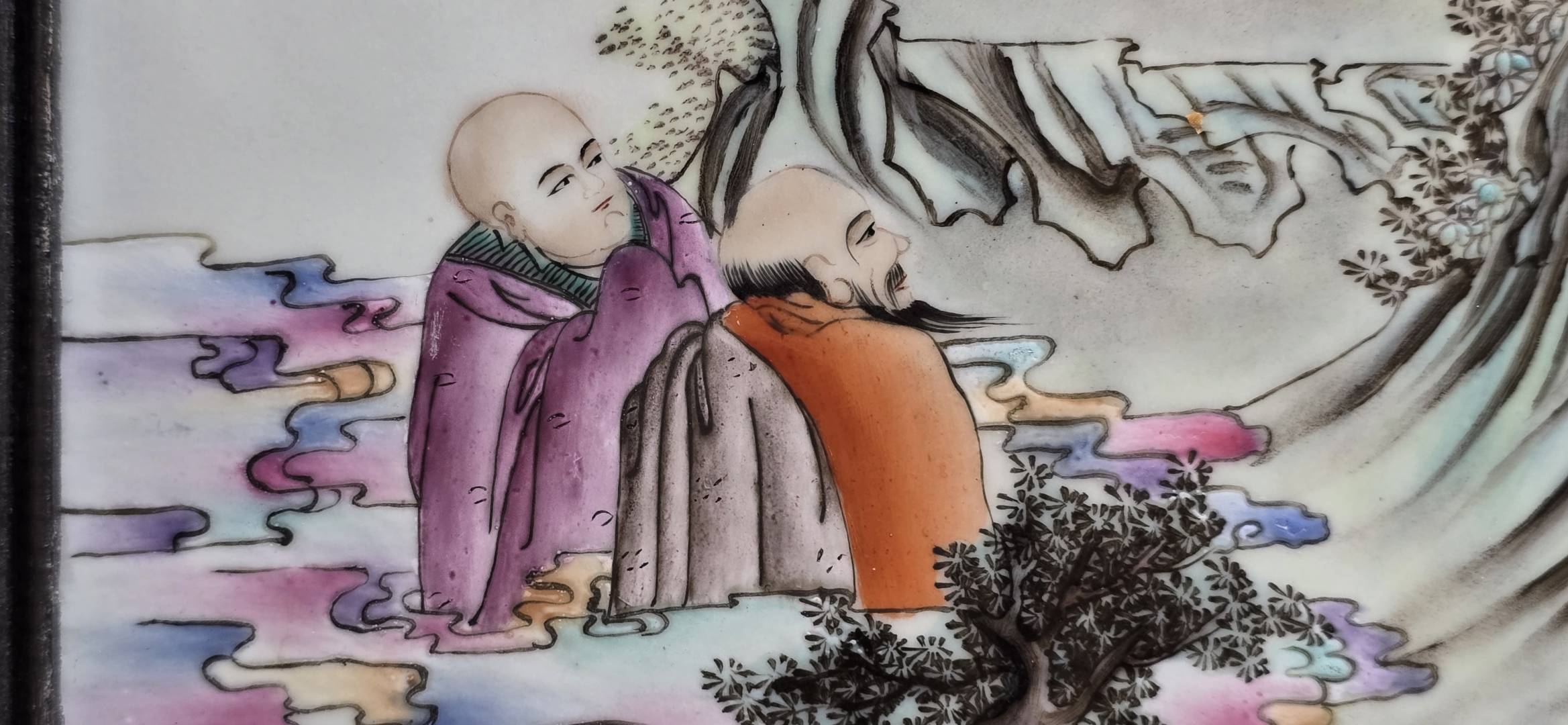
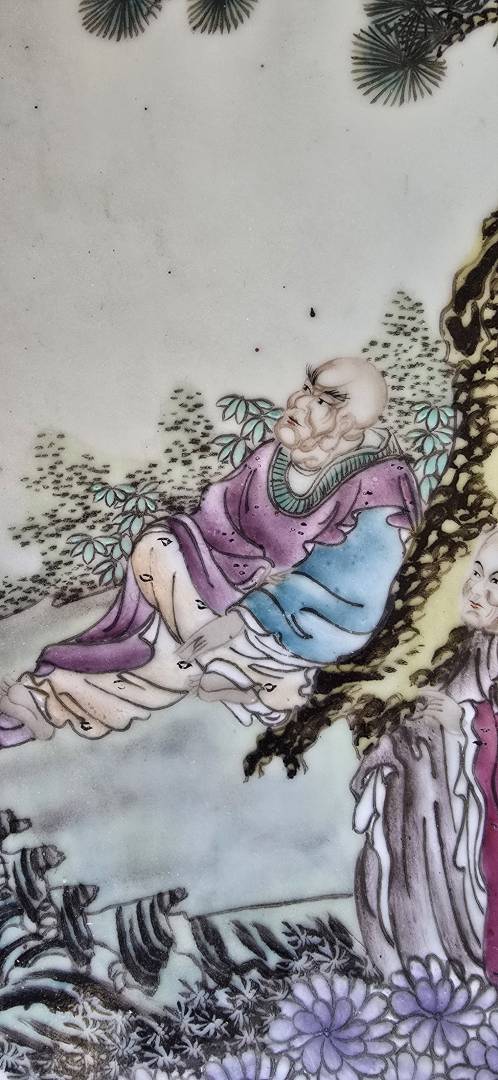
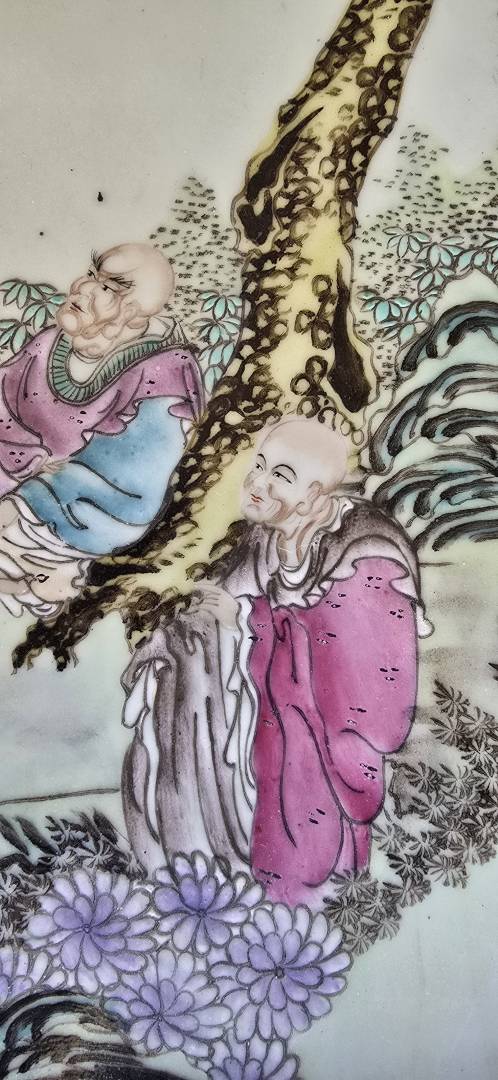
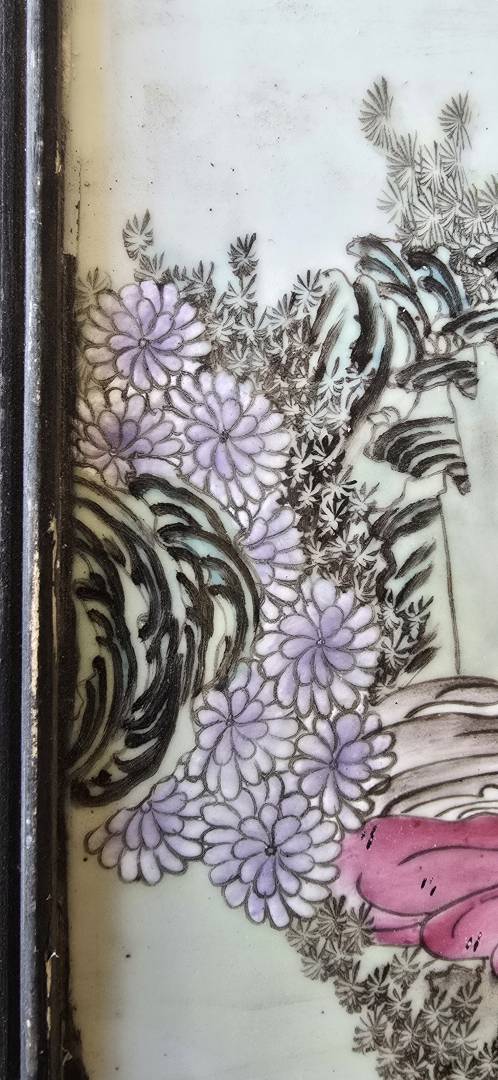

I don't see the quality of a master in these paintings. The work is average as Birgit expressed. I do think they could have a little bit of age so perhaps they are later Republic or early PROC. But I don't see these as being high value objects either way. At any rate they are interesting and attractive and would be nice to have on a wall. John

Hi Philippe -
And as with Mark and Birgit, welcome to this wonderful forum …
I would concur with Mark, in that your plaques are not by the Wang Qi, but either attributed to him or a later copy …
Look very closely at the overall painting style, individual motif details and the calligraphic writing style between the two plaques posted by Mark, and that seen on your two examples. The differences are very obvious …
However, as with John, they are attractive and would display nicely if hung …
Stuart
Thank you, Johnshoe, for your reply. And yes, I agree with you—this is average work and has little to do with what Wang Qi usually produced.
I may sound harsh, but I generally find that most 20th-century Chinese works are rather average, apart from a few rare workshops and masters. Early 20th century pieces can sometimes be decent as well. That is why I tend to focus on much older material, ideally 19th century or earlier.
Naturally, under those circumstances, my knowledge of this later period is quite limited—especially when it comes to porcelain panels.
That being said, I still find these panels interesting because they have a style that is quite different from what we usually see, and that catches my attention. I believe they deserve further research.
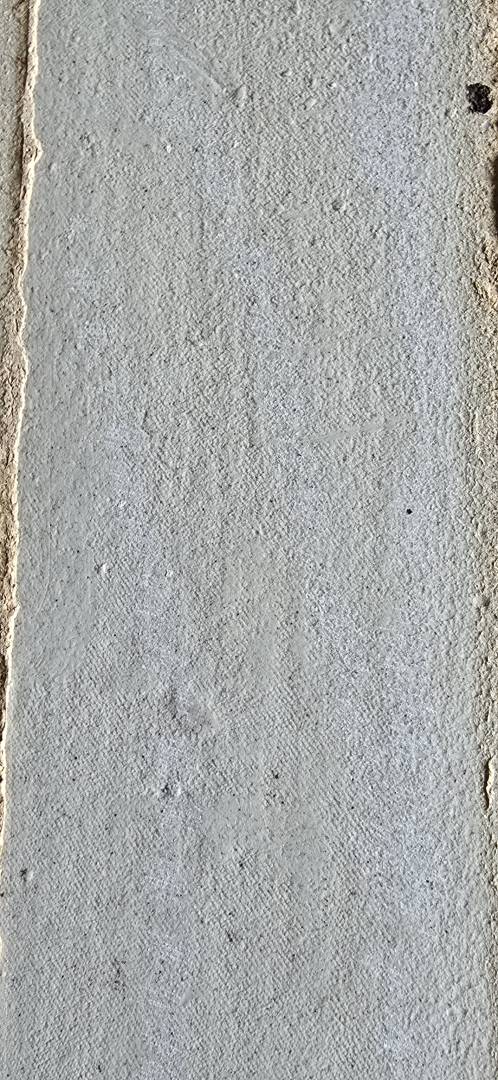
For Marc Adams, I am providing additional photos of the back of the panels as requested.
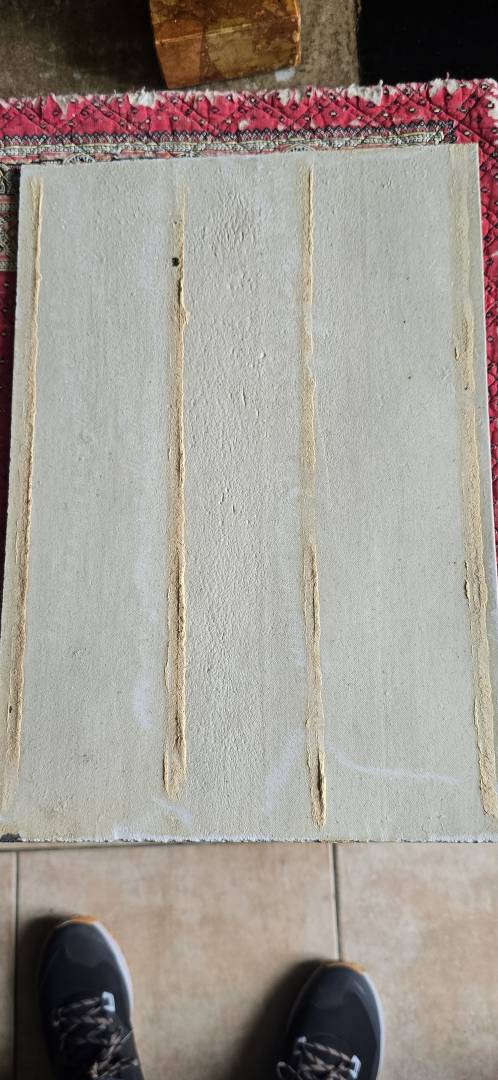
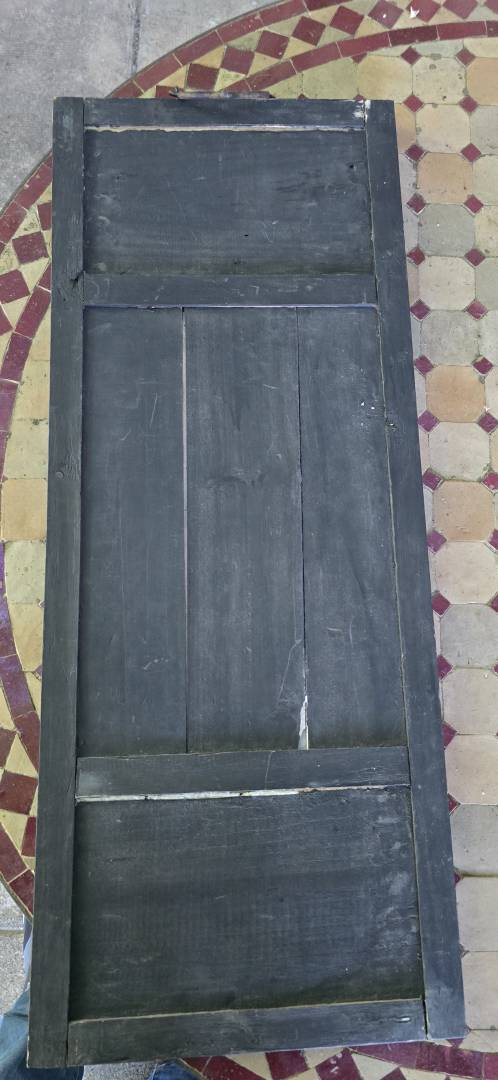
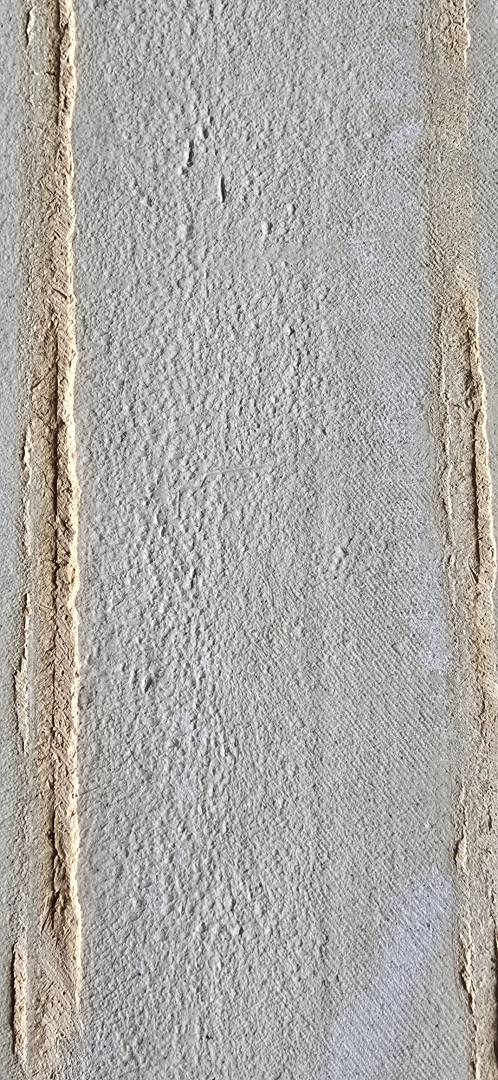
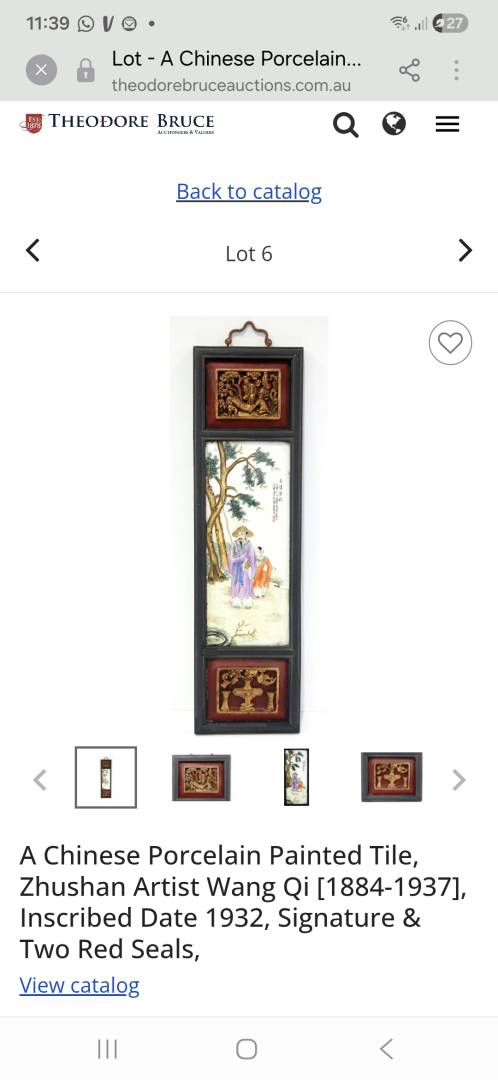
For your information, I found this panel at an auction, and the mounting appears to be very similar. I even think the upper and lower frame elements are made of the same material as mine. The difference is that, in this particular case, they do not seem to have suffered any deterioration and have retained their original painted decoration.
As for the porcelain panel itself, I personally find the painting style even weaker than mine and more conventional. Nevertheless, they still achieved a fairly respectable price at auction, which I find quite surprising.
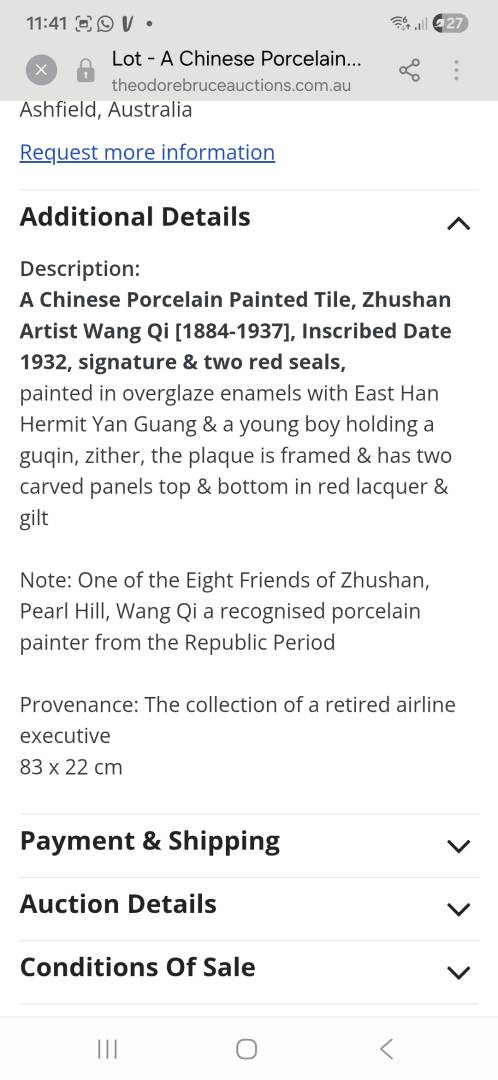
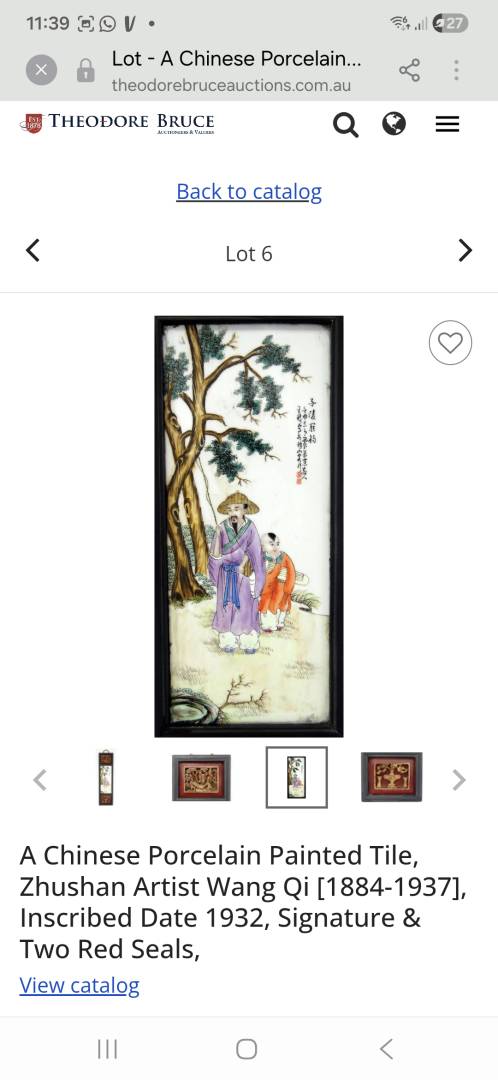
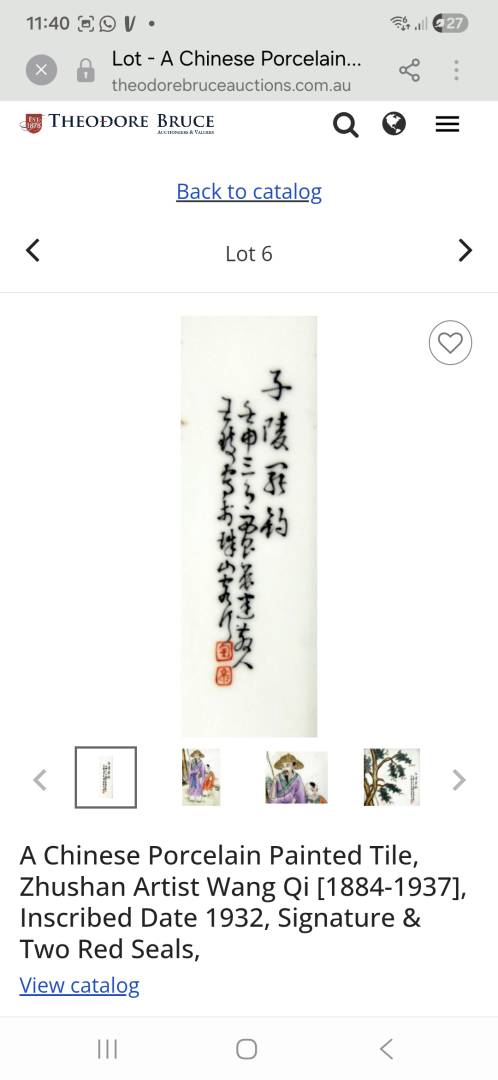
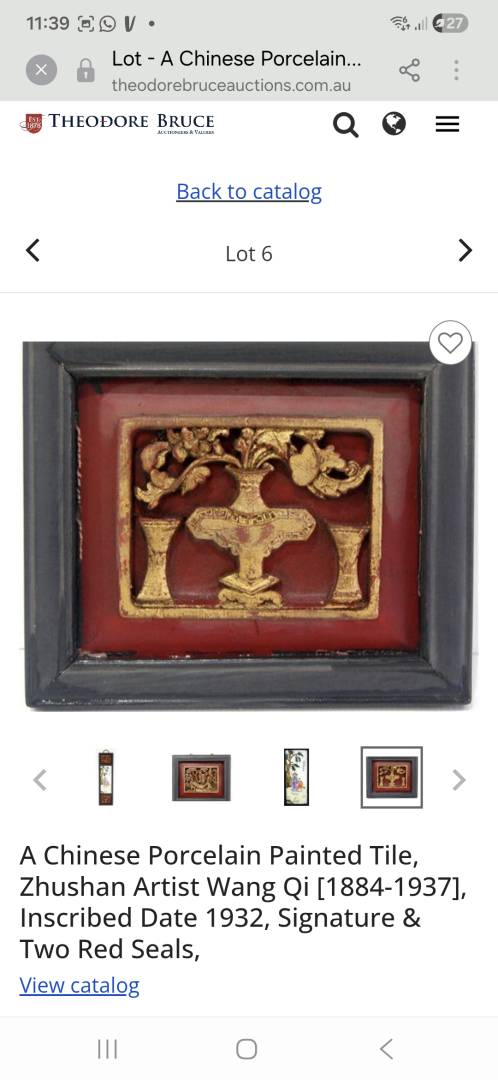
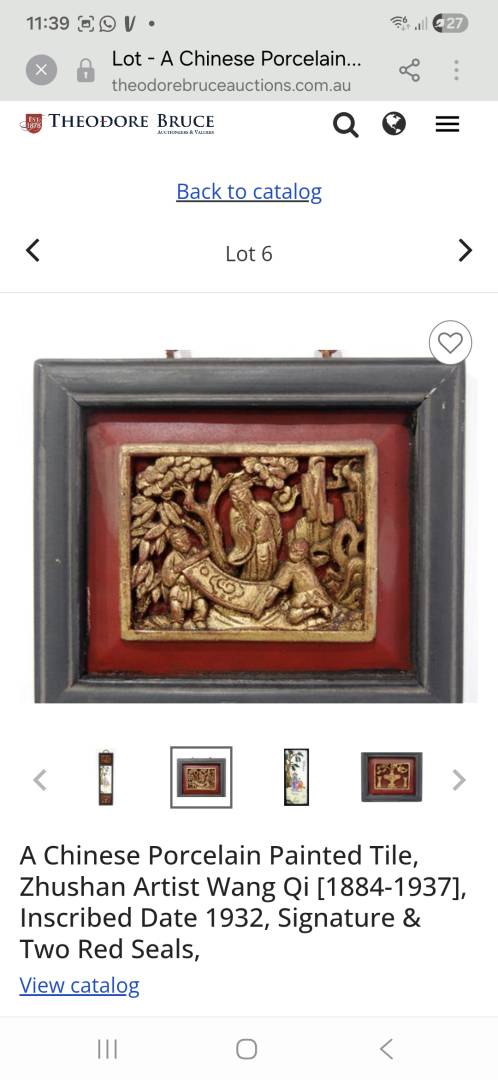
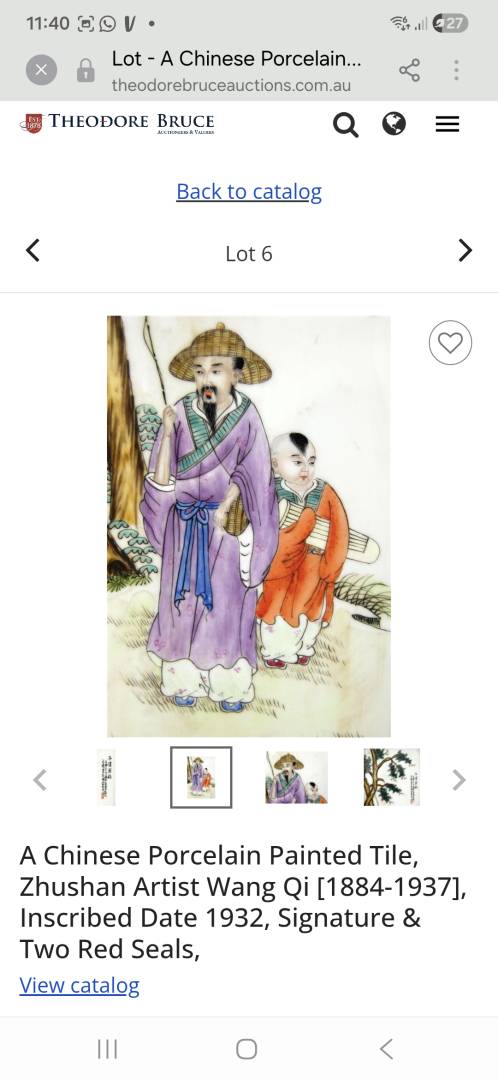
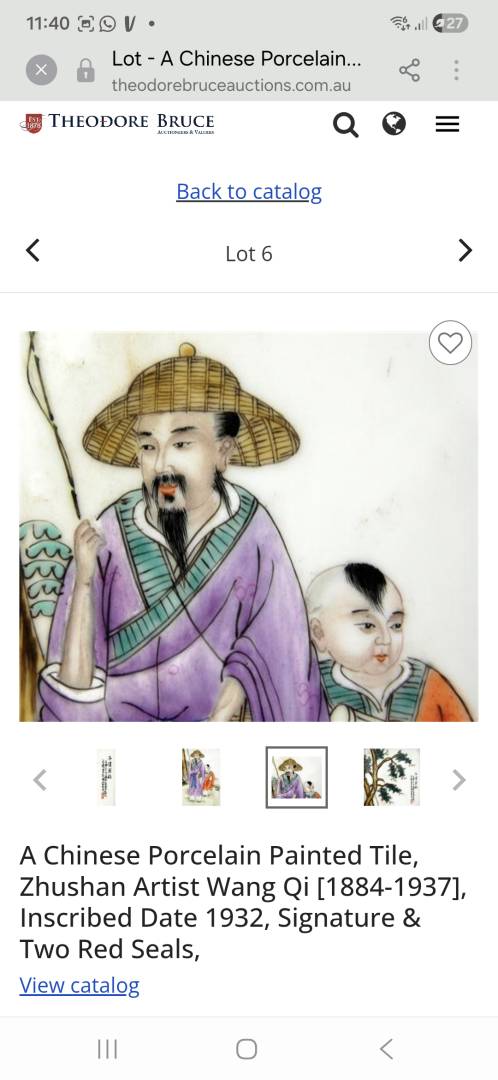
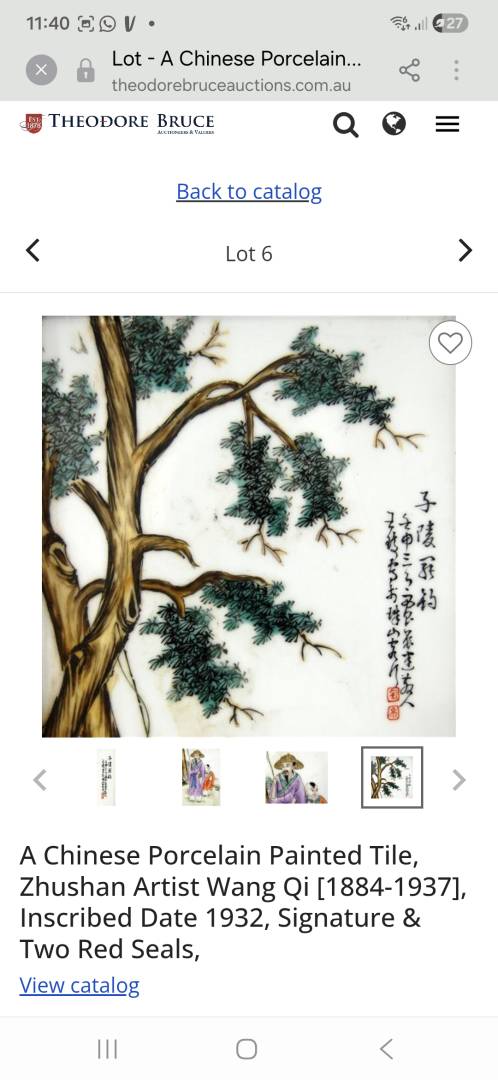
90%+ of Wang Qi porcelain are copies. Some are even better than the originals. The ones you posted from auction sales are poor copies imo. They lack depth.
Only by catefully examining the style/angle along with read mark can you determine if it is genuine or not. This was taught to me by Simon Kwan.
After viewing the backs these look ok for Republic period or even early PrOC.
Whether yours are from a student/other or simply a atrribite its impossible to know.
I did ask a friend to translate.

Thanks for visiting "The BidAmount Asian Art Forum | Chinese Art"
If you sell on eBay, or have a shop feel free to post images and descriptions and links.
Check back often for discussion about the latest news in the Chinese art and antique world. Also find out about the latest Asian art auctions at Sotheby's, Christie's, Bonhams and Tajans.
Auction results for: fine porcelain, ceramics, bronze, jade, textiles and scholar's objects. As well as Japanese, Thai, Vietnamese and other Asian cultures.
Thank you,
Peter Combs
Topics and categories on The BidAmount Asian Art Forum | Chinese Art
Kangxi vases, Kangxi dishes and chargers, Kangxi ritual pieces, Kangxi scholar's objects, Qianlong famille rose, Qianlong enamels, Qianlong period paintings, Qianlong Emporer's court, Fine porcelain of the Yongzheng period. Chinese imperial art, Ming porcelain including Jiajing, Wanli, Xuande, Chenghua as well as Ming jades and bronzes.

Join the BidAmount Chinese and Asian art discussion board and forum today
The BidAmount Asian Art Forum | Chinese Art
A free Asian art discussion board and Asian art message board for dealers and collectors of art and antiques from China, Japan, Korea, Thailand, Cambodia, Vietnam and the rest of Asia. Linked to all of the BidAmount Asian art reference areas, with videos from plcombs Asian Art and Bidamount on YouTube. Sign up also for the weekly BidAmount newsletter and catalogs of active eBay listing of Chinese porcelain, bronze, jades, robes, and paintings.
The art of calligraphy - and for the ancient Chinese it certainly was an art - aimed to demonstrate superior control and skill using brush and ink. Calligraphy established itself as one of the major Chinese art forms during the Han dynasty (206 BCE - 220 CE), and for two millennia after, all educated men were expected to be proficient at it.
The Museum’s collections of Asian art span nearly five millennia and encompass the cultures of China, the Himalayas, India, Japan, Korea, and Southeast Asia. In 2007, the Museum launched an initiative to create dedicated galleries for the collection, beginning with a gallery for the arts of Korea ...
Chinese art is full of symbolism, in that artists typically seek to depict some aspect of a totality of which they are intuitively aware.
China Online Museum is the finest online museum of Chinese art. It features Chinese calligraphy, painting, ceramics, bronzes, carving, and other artworks.
Chinese Ceramics & Works of Art. Overview Upcoming auctions Contacts Auction results ... Christie’s sales of Chinese ceramics and works of art showcase centuries of Chinese history. Held throughout the year in London, New York, Paris and Hong Kong, they attract a wide audience of collectors and connoisseurs vying for pieces as diverse as ...
Explore Asian Art Week. Contact the Specialist Department. Chinese Paintings ... Senior Specialist, Head of Sale. ehammer@christies.com. Tel:+1 212 641 5760. Bid in-person or online for the upcoming auction:Fine Chinese Paintings on 10 September 2019 at New York. Bid in-person or online for the upcoming auction:Fine Chinese Paintings on 10 ...
Discover an abundance of must-see art from all corners of a vast continent at Christie’s NY Asian Art Week. From contemporary classical and Chinese paintings to works with exemplary provenance from the Art Institute of Chicago, our Rockefeller Paza galleries will be full of ancient treasures and contemporary masterworks in a salute to the vibrant arts of Asia.
Sold to benefit The Art Institute of Chicago’s Asian Art Acquisition Fund, the sale features 84 lots with a focus on Ming and Qing porcelains, and offers a rare insight into the taste for collecting Chinese ceramics and works of art in the Midwest from the end of the 19th century through the 1980s. Highlights include two Wanli wucai garlic-head vases, a Qianlong mark and period, blue and ...
Specialist, Chinese Paintings, Christie's London Dr Malcolm McNeill is a Specialist in Chinese Paintings at Christie’s, based in London. He previously worked as an assistant curator of the Chinese collections and the Victoria and Albert Museum in London, as a researcher at the British Museum, and as a translator and tour guide at the National Palace Museum in Taipei.
The Christie's Education 2020 Conference: The Chinese Art Market 18 Jun 2019 Christie’s Education is delighted to announce our first international academic conference in Asia which will take place in Hong Kong from 26-27 November 2020 at the Hong Kong Convention and Exhibition Centre and will run in parallel with Christie’s Hong Kong Autumn Auctions.
The summer Chinese Art sale in Hong Kong will feature works of art from several private collections, including Qing porcelains and textile from the collection of the legendary Chinese art dealer A. W. Bahr (1877–1959), fine gilt bronze Buddhist sculptures from an old Hong Kong collection, an East Asian collection of Qing dynasty wine cups and jades, and a Japanese collection of Song ceramics ...
Sotheby's Chinese Works of Art Department holds two auctions each year in London, New York, Hong Kong and Paris.
Chinese Art - View Auction details, bid, buy and collect the various artworks at Sothebys Art Auction House.
With more than 340 Chinese works of art dating from the Neolithic to the Republic periods, highlights of this sale include a selection of Qing Imperial monochromes from the collection of Arnold and Blema Steinberg, early ceramics from the Art Institute of Chicago and Chinese porcelain and works of art from the collection of Henry Arnhold.
Results: Sotheby's Asia Week achieved $52.4 million in six strong auctions, exceeding pre-sale estimates. With 76.5% of lots sold and 60.3% of lots surpassing high estimates, the Asian art sales at Sotheby's indicate continued collector interest in the finest works of art from China, India and and the Himalayas.
Today's sale of Important Chinese Art will proceed as planned with sessions at 10 AM and 2 PM EDT. Sotheby's will be monitoring the weather conditions throughout the day and will be available to coordinate alternative bidding options should conditions make it difficult for clients to attend the auction in person.
Bonhams Chinese Art department is renowned for offering the finest works of art representing the richness and breadth of China's artistic heritage, particularly Imperial porcelain, white and spinach green jades, cloisonné and Buddhist art. Specialised international auctions are held globally, including London, Hong Kong and San Francisco.
Bonhams : Chinese Works of Art We use cookies to remember choices you make on functionality and personal features to enhance your experience to our site. By continuing to use our site you consent to the use of cookies. Please refer to our privacy and cookie policies for more information.
Bonhams Fine Art Auctioneers & Valuers: auctioneers of art, pictures, collectables and motor cars. We use cookies to remember choices you make on functionality and personal features to enhance your experience to our site. By continuing to use our site you consent to the use of cookies. ... Chinese Art (US) General enquiries
Bonhams : Fine Chinese Art We use cookies to remember choices you make on functionality and personal features to enhance your experience to our site. By continuing to use our site you consent to the use of cookies. Please refer to our privacy and cookie policies for more information.
Bonhams Fine Art Auctioneers & Valuers: auctioneers of art, pictures, collectables and motor cars Bonhams : Asian Art We use cookies to remember choices you make on functionality and personal features to enhance your experience to our site.
Bonhams are international auctioneers of fine Chinese and Japanese art. We specialise in rare Imperial and Export Chinese ceramics and works of art, as well as Japanese ceramics, fine and decorative works of art from the Neolithic Period to the 20th century. View on map
Bonhams Fine Art Auctioneers & Valuers: auctioneers of art, pictures, collectables and motor cars. We use cookies to remember choices you make on functionality and personal features to enhance your experience to our site. By continuing to use our site you consent to the use of cookies. ... Asian Art Bonhams. Work. 22 Queen St.